Horseheads 1855 Extension Historic District

Why it's listed
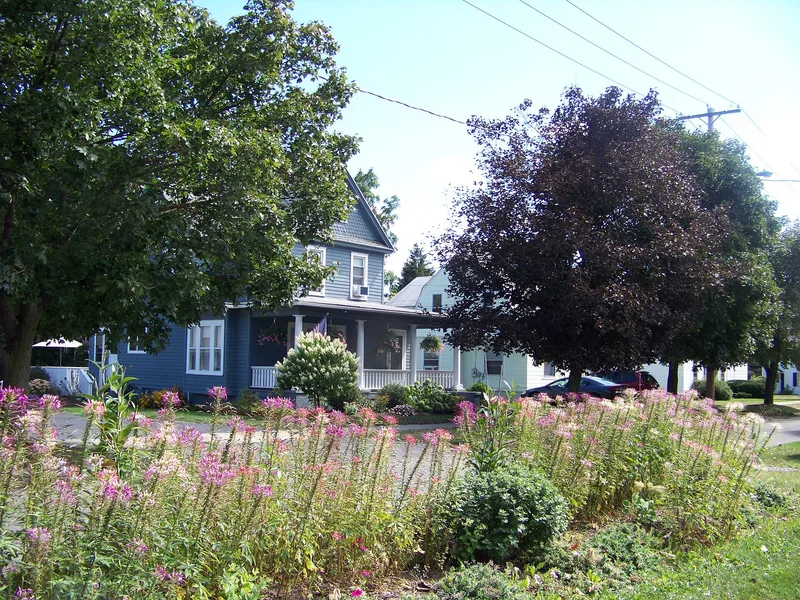
Grand Central Avenue in Horseheads, New York, is a broad boulevard with a grass median, and it anchors a neighborhood of 31 buildings that grew after the village extended its boundary in 1855. Large frame houses on spacious, tree-lined lots show the changing tastes of roughly 1830 to 1920, from a Greek Revival house on Steuben Street and a Gothic Revival cottage with a matching privy on Pine Street to Italianate villas with towers, Queen Anne and Eastlake homes, two bungalows and a Prairie-style house. The brick Horseheads Union School, designed in 1890 by Elmira architects Joseph H. Pierce and H.H. Bickford, adds a civic landmark. The area grew from farmland subdivided in 1850, during the Chemung Canal's peak of trade. The district was recognized for the integrity and harmony of its setting, not only individual buildings. Only two modern brick houses intrude, and the school was vacant and at risk of demolition.
Machine-generated summary. This summary was generated by a language model from the official nomination document and has not been reviewed line by line by an editor. It may contain errors. Check the source document before relying on any detail. Source: nomination document (PDF) · catalog entry. Generated October 2026 (model claude-sonnet-5-5, prompt v1.0-2026-10-29).
| Period of significance | 1800-1899, 1900- |
|---|---|
| Styles | Vernacular 19th and early 20th century styles: Greek Revival, Gothic Revival, Italianate, Queen Anne, Eastlake, Stick, Bungalow, Prairie |
| Areas of significance | Architecture |
| Acreage | 11 |
| Boundary source | NPS cultural-resource GIS polygon |
| Full listing page | Horseheads 1855 Extension Historic District (property record) |
What listing means for this property
This is a historic district. Buildings within its boundary are either contributing (they add to the district's significance) or non-contributing. Owners of contributing income-producing buildings can claim the 20% federal rehabilitation tax credit; homeowners should look at state credits. National Register districts impose no design review by themselves; a local historic district ordinance, if one exists, does (the difference explained).
General information, not legal or tax advice. Rules change; confirm with your State Historic Preservation Office or a qualified adviser.