Highland Park Historic District

Why it's listed
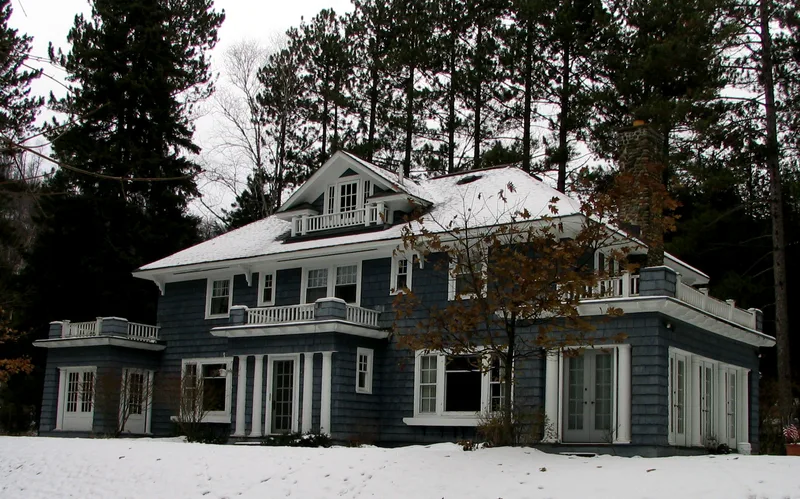
Highland Park is a quiet residential enclave of large private houses along Park Avenue and Old Military Road at the northeast edge of Saranac Lake. Its 22 contributing resources, built between 1896 and 1930, sit on broad lots set back at least forty feet from the street, with views across the Saranac River valley to the mountains. The land was once a hop farm and was developed from 1898 by Dr. Ezra McClellan, whose deed restrictions required residential use only, minimum construction costs and generous setbacks, excluding commercial cure cottages. Nearly all the houses sheltered people with tuberculosis and include cure features such as glazed second-story sleeping porches, extra-wide doorways and call bells. Local architects, including William L. Coulter and William G. Distin, worked in Shingle, Tudor Revival, Colonial Revival, Dutch Colonial and Mediterranean Revival styles. Residents included Dr. Lawrason Brown, author Thomas B. Aldrich and several wealthy families. The district is valued as an intact collection of single-family cure cottage architecture.
Machine-generated summary. This summary was generated by a language model from the official nomination document and has not been reviewed line by line by an editor. It may contain errors. Check the source document before relying on any detail. Source: nomination document (PDF) · catalog entry. Generated October 2026 (model claude-sonnet-5-5, prompt v1.0-2026-10-29).
| Period of significance | 1896-ca.1940 |
|---|---|
| Styles | Late 19th & 20th Century Revivals: Colonial Revival, Tudor Revival, Shingle Style |
| Areas of significance | Health/Medicine, Architecture |
| Boundary source | NPS cultural-resource GIS polygon |
| Full listing page | Highland Park Historic District (property record) |
What listing means for this property
This is a historic district. Buildings within its boundary are either contributing (they add to the district's significance) or non-contributing. Owners of contributing income-producing buildings can claim the 20% federal rehabilitation tax credit; homeowners should look at state credits. National Register districts impose no design review by themselves; a local historic district ordinance, if one exists, does (the difference explained).
General information, not legal or tax advice. Rules change; confirm with your State Historic Preservation Office or a qualified adviser.