Henderson Place Historic District

The National Park Service has not published a boundary polygon for this district; the map shows the listed properties inside it and the district's reference point.
Why it's listed
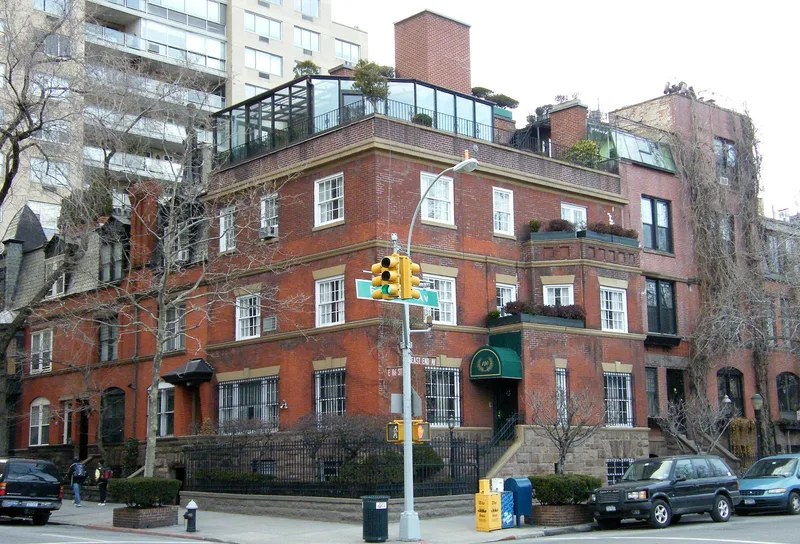
Henderson Place Historic District is a small enclave of town houses on Manhattan's Upper East Side, covering less than half an acre. Developer John C. Henderson began building the group in 1881 on land once part of William Waldron's farm, and the architects Lamb & Rich designed it, with work largely complete by 1882. Of 32 original houses, 24 remain; eight on the west side of Henderson Place were replaced by an apartment building. The survivors are two stories above basements, with dormers set in steep slate roofs, smooth red brick fronts with gables, parapets and pediments, and rock-faced sandstone basements. Many sit behind low stone walls, with small front yards. The design draws on the Elizabethan manor house style, mixed with Flemish and classic detail, and was intended for people of moderate means. The district is valued for its uniform yet picturesque character, and its residents have included many notable New Yorkers, among them Alfred Lunt and Lynn Fontanne.
Machine-generated summary. This summary was generated by a language model from the official nomination document and has not been reviewed line by line by an editor. It may contain errors. Check the source document before relying on any detail. Source: nomination document (PDF) · catalog entry. Generated October 2026 (model claude-sonnet-5-5, prompt v1.0-2026-10-29).
| Period of significance | 19th Century |
|---|---|
| Styles | Elizabethan manor house style combined with Flemish and classic detail (Queen Anne type developed by Norman Shaw) |
| Areas of significance | Architecture |
| Acreage | 0.9 |
| Boundary source | not published |
| Full listing page | Henderson Place Historic District (property record) |
What listing means for this property
This is a historic district. Buildings within its boundary are either contributing (they add to the district's significance) or non-contributing. Owners of contributing income-producing buildings can claim the 20% federal rehabilitation tax credit; homeowners should look at state credits. National Register districts impose no design review by themselves; a local historic district ordinance, if one exists, does (the difference explained).
General information, not legal or tax advice. Rules change; confirm with your State Historic Preservation Office or a qualified adviser.