Grove-Linden-St. John's Historic District

The National Park Service has not published a boundary polygon for this district; the map shows the listed properties inside it and the district's reference point.
Why it's listed
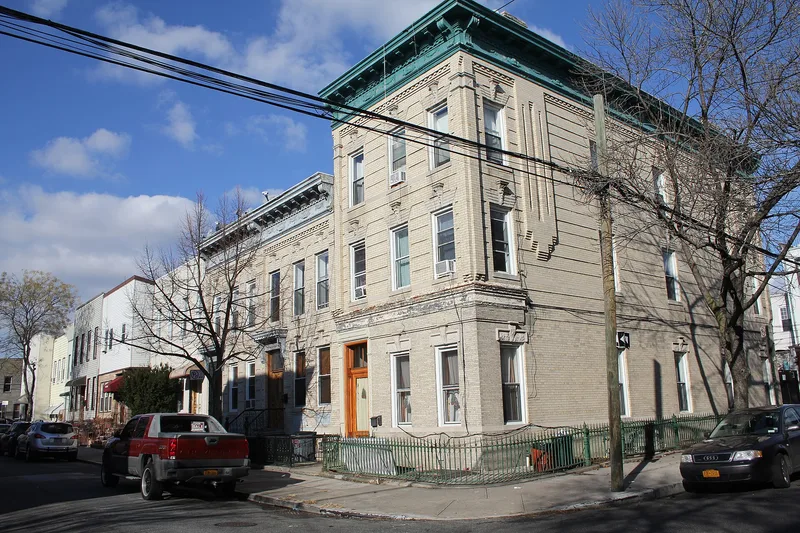
Fifty-one brick tenements and row houses form this two-acre district in Ridgewood, Queens, along Linden Street, Grove Street and St. John's Road between Fairview and Woodward Avenues. Built between 1907 and 1910 of light brown, iron-spot brick, most are three-story buildings with two apartments per floor, alongside a few two- and three-story row houses. Romanesque Revival detailing includes corbelled brick pilasters, dentil courses, brick laid to imitate rusticated stone, pressed metal cornices, low brownstone stoops and ornate ironwork. The standout feature is the cast-stone mascaron keystone set in splayed lintels. About twenty different caricature faces are used, so no face repeats on a single facade and no two consecutive buildings share the same combination. The ornament recalled German Romanesque architecture for the German developers who built Ridgewood. One team, Spaeth and Senger of Brooklyn, built the whole district from plans by Louis Berger and Co. Few alterations have occurred, and all cornices survive.
Machine-generated summary. This summary was generated by a language model from the official nomination document and has not been reviewed line by line by an editor. It may contain errors. Check the source document before relying on any detail. Source: nomination document (PDF) · catalog entry. Generated October 2026 (model claude-sonnet-5-5, prompt v1.0-2026-10-29).
| Period of significance | 1908-1910 |
|---|---|
| Styles | Romanesque Revival |
| Areas of significance | Architecture |
| Acreage | 2 |
| Boundary source | not published |
| Full listing page | Grove-Linden-St. John's Historic District (property record) |
What listing means for this property
This is a historic district. Buildings within its boundary are either contributing (they add to the district's significance) or non-contributing. Owners of contributing income-producing buildings can claim the 20% federal rehabilitation tax credit; homeowners should look at state credits. National Register districts impose no design review by themselves; a local historic district ordinance, if one exists, does (the difference explained).
General information, not legal or tax advice. Rules change; confirm with your State Historic Preservation Office or a qualified adviser.