Greenwich Village Historic District (Additional Documentation)

Why it's listed
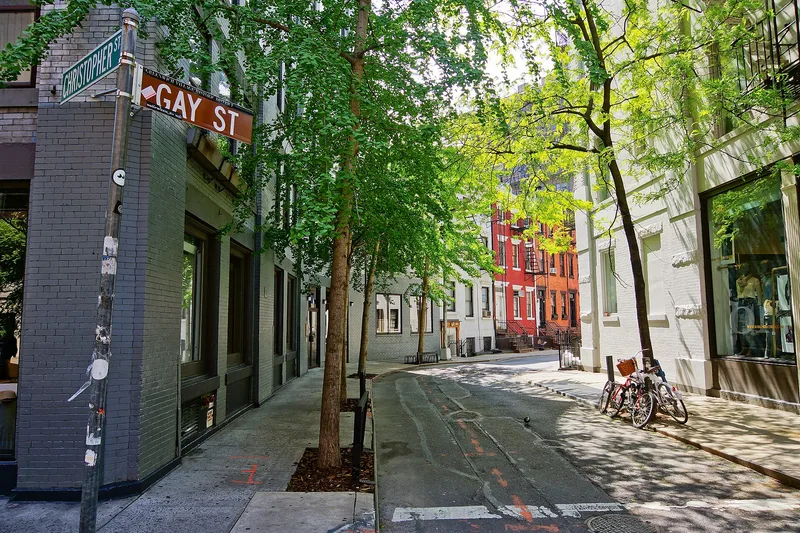
Greenwich Village, on the west side of lower Manhattan, is a district of more than one hundred irregular blocks bounded roughly by West 13th Street, St. Luke's Place, University Place and Washington Street. Its buildings range from an 1799 frame house at 77 Bedford Street to structures of the early twentieth century. Long rows of town houses in the Federal, Greek Revival, Gothic Revival and Italianate styles define the area, along with fine ironwork, former stables such as those on Washington Mews and MacDougal Alley, and artists' studios atop many houses. Churches include the Church of the Ascension and the First Presbyterian Church, and the Jefferson Market Courthouse, now a library, is a Gothic Revival landmark. West of Sixth Avenue, narrow streets bend and turn, producing the village's surprising streetscapes. Washington Square, with its Greek Revival houses and arch, anchors the district. The boundaries follow those already designated by the city's landmarks commission. Modern apartment blocks, garages, gas stations and vacant lots are recorded as intrusions.
Machine-generated summary. This summary was generated by a language model from the official nomination document and has not been reviewed line by line by an editor. It may contain errors. Check the source document before relying on any detail. Source: nomination document (PDF) · catalog entry. Generated October 2026 (model claude-sonnet-5-5, prompt v1.0-2026-10-29).
| Styles | Federal, Greek Revival, Gothic Revival, Italianate |
|---|---|
| Areas of significance | Art, Literature, Architecture, Social History |
| Acreage | 220 |
| Boundary source | NPS cultural-resource GIS polygon |
| Full listing page | Greenwich Village Historic District (Additional Documentation) (property record) |
What listing means for this property
This is a historic district. Buildings within its boundary are either contributing (they add to the district's significance) or non-contributing. Owners of contributing income-producing buildings can claim the 20% federal rehabilitation tax credit; homeowners should look at state credits. National Register districts impose no design review by themselves; a local historic district ordinance, if one exists, does (the difference explained).
General information, not legal or tax advice. Rules change; confirm with your State Historic Preservation Office or a qualified adviser.