Gould Mansion Complex

Why it's listed
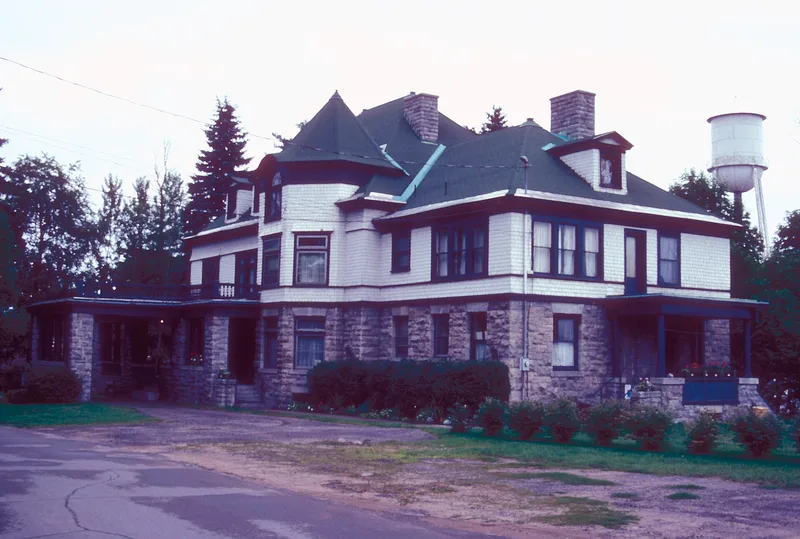
Overlooking the Black River in Lyons Falls, this three-building complex was built between 1902 and 1904 for paper manufacturer Gordius H. P. Gould. It includes a large shingled and limestone mansion with a conical-roofed round tower and an octagonal tower, a carriage and horse barn, and a small Romanesque office of local limestone and Gouverneur granite. Albany architects Fuller and Pitcher designed it, and local masons and contractors carried out the work. Gould began as a stagecoach driver and went on to build a network of pulp and paper mills. As a state legislator he backed waterway improvements and the 1888 Adirondack preservation bill. The buildings combine Richardsonian Romanesque, Arts and Crafts and Queen Anne Revival influences, and they show how a home, office and barn were planned together beside a major paper mill. The mansion now houses the Lewis County Historical Society's museum.
Machine-generated summary. This summary was generated by a language model from the official nomination document and has not been reviewed line by line by an editor. It may contain errors. Check the source document before relying on any detail. Source: nomination document (PDF) · catalog entry. Generated October 2026 (model claude-sonnet-5-5, prompt v1.0-2026-10-29).
| Period of significance | 1902-1904 |
|---|---|
| Styles | Richardsonian Romanesque and Arts and Crafts (office); Queen Anne Revival (house), with classical and Tudor interior elements |
| Areas of significance | Industry, Commerce, Politics/Government, Architecture |
| Acreage | 0.5 |
| Boundary source | NPS cultural-resource GIS polygon |
| Full listing page | Gould Mansion Complex (property record) |
What listing means for this property
This is a historic district. Buildings within its boundary are either contributing (they add to the district's significance) or non-contributing. Owners of contributing income-producing buildings can claim the 20% federal rehabilitation tax credit; homeowners should look at state credits. National Register districts impose no design review by themselves; a local historic district ordinance, if one exists, does (the difference explained).
General information, not legal or tax advice. Rules change; confirm with your State Historic Preservation Office or a qualified adviser.