Good Counsel Complex

Why it's listed
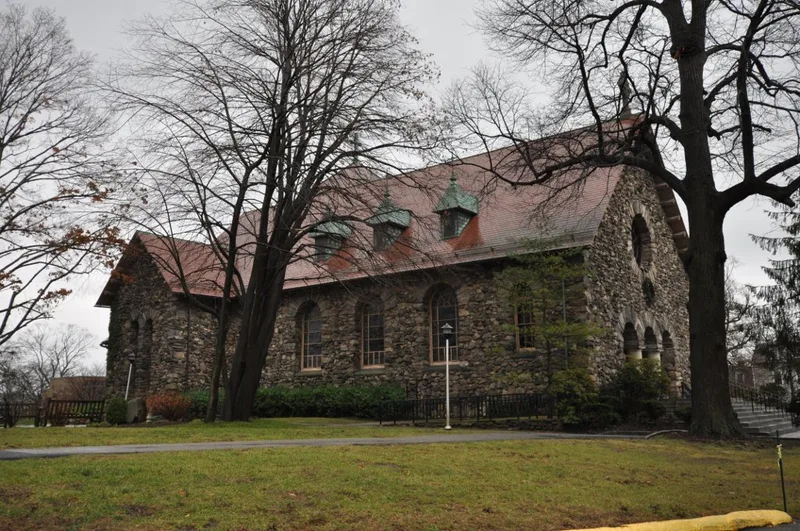
Good Counsel Complex is a thirteen-acre religious and educational campus on North Broadway in White Plains, Westchester County. It was developed by the Sisters of the Divine Compassion, an order founded by Mother Mary Veronica, and its buildings date from 1856 to 1923. The grounds keep a park-like setting of lawns, mature trees and curving roads. The main buildings include a 1908 stuccoed convent, an 1897 stone chapel with a rose window and an original Odell organ, and the 1891 House of Nazareth school, all designed by Lawrence O'Conner. Two older residences, the 1867 Italianate and Second Empire "Mapleton" and the 1856 Tilford House, were absorbed into the campus. Nine buildings contribute to the district, while a 1955 house, a sports building, a bandstand and a security kiosk do not. The property was listed for its architecture, particularly the Romanesque Revival chapel and the Italian-inspired Mediterranean design of the convent and school. Today it still houses an elementary school and the sisters' convent.
Machine-generated summary. This summary was generated by a language model from the official nomination document and has not been reviewed line by line by an editor. It may contain errors. Check the source document before relying on any detail. Source: nomination document (PDF) · catalog entry. Generated October 2026 (model claude-sonnet-5-5, prompt v1.0-2026-10-29).
| Period of significance | 1856-1923 |
|---|---|
| Styles | Mid 19th Century/Italianate; Late 19th and Early 20th Century Revivals/Mediterranean Revival |
| Areas of significance | Architecture |
| Acreage | 13 |
| Boundary source | NPS cultural-resource GIS polygon |
| Full listing page | Good Counsel Complex (property record) |
What listing means for this property
This is a historic district. Buildings within its boundary are either contributing (they add to the district's significance) or non-contributing. Owners of contributing income-producing buildings can claim the 20% federal rehabilitation tax credit; homeowners should look at state credits. National Register districts impose no design review by themselves; a local historic district ordinance, if one exists, does (the difference explained).
General information, not legal or tax advice. Rules change; confirm with your State Historic Preservation Office or a qualified adviser.