Gates, Cyrus, Farmstead

Why it's listed
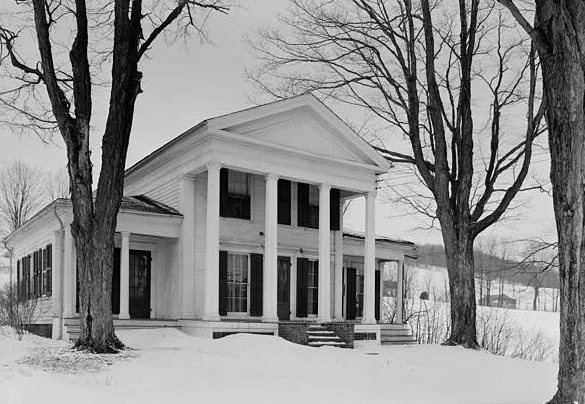
This farmstead of about 130 acres lies on both sides of Old Nanticoke Road, four miles north of the hamlet of Maine in Broome County, New York. Its main building is a wood-frame Greek Revival farmhouse built between 1848 and 1851 for Cyrus Gates. The house has a two-story center block with a front gable and portico, flanked by one-story wings, and its front rooms keep elaborate woodwork and a plaster ceiling medallion. Its plan has no central hall, and family accounts attribute the enclosed staircase to Gates's dislike of drafts. Other historic resources include a dairy barn with a milk house, a second barn now used as a garage, a bee house, a granary later used as a blacksmith shop, a privy, a tenant's house from about 1938-40, and a small family cemetery with burials from about 1839 to 1870. The district reflects the farm as it stood in its last significant period of agricultural use, in the 1930s. Family tradition also links the farm to Underground Railroad activity.
Machine-generated summary. This summary was generated by a language model from the official nomination document and has not been reviewed line by line by an editor. It may contain errors. Check the source document before relying on any detail. Source: nomination document (PDF) · catalog entry. Generated October 2026 (model claude-sonnet-5-5, prompt v1.0-2026-10-29).
| Styles | Greek Revival |
|---|---|
| Areas of significance | Agriculture, Architecture, Social History |
| Acreage | 130 |
| Boundary source | NPS cultural-resource GIS polygon |
| Full listing page | Gates, Cyrus, Farmstead (property record) |
What listing means for this property
This is a historic district. Buildings within its boundary are either contributing (they add to the district's significance) or non-contributing. Owners of contributing income-producing buildings can claim the 20% federal rehabilitation tax credit; homeowners should look at state credits. National Register districts impose no design review by themselves; a local historic district ordinance, if one exists, does (the difference explained).
General information, not legal or tax advice. Rules change; confirm with your State Historic Preservation Office or a qualified adviser.