Garfield Place Historic District

Why it's listed
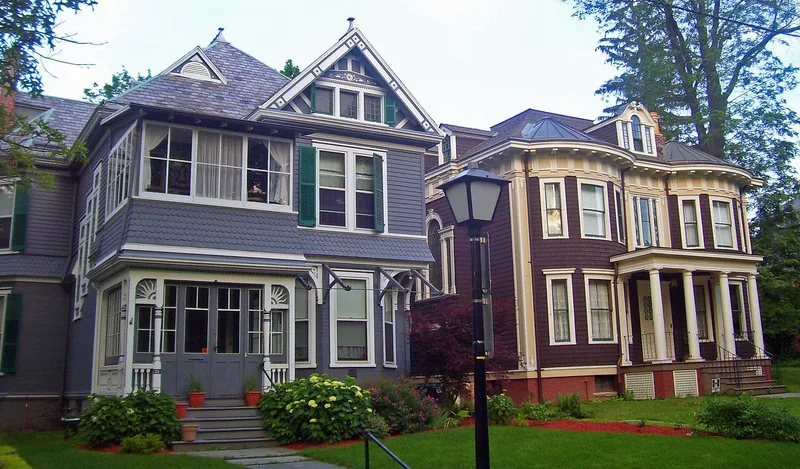
Garfield Place is a tree-lined residential street on a hill above the Hudson Valley in Poughkeepsie. The historic district runs from Montgomery Street to Franklin Street and includes about twenty-five dwellings and several outbuildings. Most houses date from the mid-nineteenth century, with a few from the early twentieth. They range from simple gabled structures to elaborate buildings with towers, brackets, cupolas, porches and mansard roofs. The land was part of the Little Commons and was laid out as building lots after 1836 by a group of partners. Building began in 1852, when partner George Corlies built a home to show the lifestyle the neighborhood offered. The street, once South Liberty Street, was renamed Garfield Place in 1881. Its residents included merchants, physicians, lawyers, bankers and manufacturers, and the district shows the social and economic life of Poughkeepsie in that period. Surviving features include a wooden kiosk from about 1861 and a carriage house.
Machine-generated summary. This summary was generated by a language model from the official nomination document and has not been reviewed line by line by an editor. It may contain errors. Check the source document before relying on any detail. Source: nomination document (PDF) · catalog entry. Generated October 2026 (model claude-sonnet-5-5, prompt v1.0-2026-10-29).
| Period of significance | 19th Century (specific date 1873) |
|---|---|
| Areas of significance | Architecture |
| Acreage | 20 |
| Boundary source | NPS cultural-resource GIS polygon |
| Full listing page | Garfield Place Historic District (property record) |
What listing means for this property
This is a historic district. Buildings within its boundary are either contributing (they add to the district's significance) or non-contributing. Owners of contributing income-producing buildings can claim the 20% federal rehabilitation tax credit; homeowners should look at state credits. National Register districts impose no design review by themselves; a local historic district ordinance, if one exists, does (the difference explained).
General information, not legal or tax advice. Rules change; confirm with your State Historic Preservation Office or a qualified adviser.