Erie Canal

Why it's listed
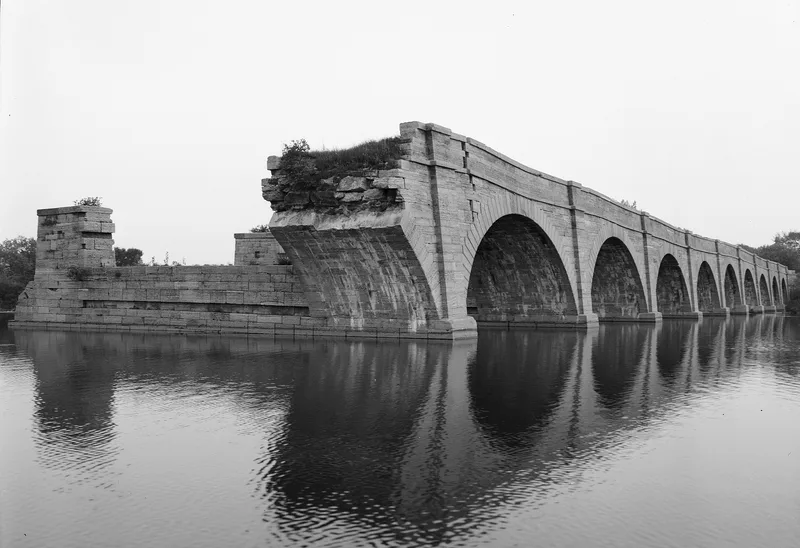
This stretch of the Erie Canal near Fort Hunter, New York, runs just over three and a half miles and crosses Schoharie Creek. It holds the original 1820 canal, which was 40 feet wide and four feet deep, and the 1841 enlarged canal, at 70 by seven feet more than three times its size. The two share one course in the east and diverge to the west. The Schoharie Aqueduct carried the canal over the creek. Six surviving locks, including Yankee Hill Lock and the Empire Lock built by James C. Ott in 1838-41, mark the route, along with arched masonry culverts and an iron culvert. Five of 14 major buildings contribute, among them a Greek Revival grocery, taverns converted for canal traffic and two Dutch barns at Wemp's Basin. Six canal settlements sites probably hold archaeological remains. Much of the land is a state historic site, with farmland, woods and private homes alongside.
Machine-generated summary. This summary was generated by a language model from the official nomination document and has not been reviewed line by line by an editor. It may contain errors. Check the source document before relying on any detail. Source: nomination document (PDF) · catalog entry. Generated October 2026 (model claude-sonnet-5-5, prompt v1.0-2026-10-29).
| Areas of significance | Commerce, Historic - Non-Aboriginal, Engineering, Transportation, Exploration/Settlement |
|---|---|
| Acreage | 168 |
| Boundary source | NPS cultural-resource GIS polygon |
| Full listing page | Erie Canal (property record) |
What listing means for this property
This is a historic district. Buildings within its boundary are either contributing (they add to the district's significance) or non-contributing. Owners of contributing income-producing buildings can claim the 20% federal rehabilitation tax credit; homeowners should look at state credits. National Register districts impose no design review by themselves; a local historic district ordinance, if one exists, does (the difference explained).
General information, not legal or tax advice. Rules change; confirm with your State Historic Preservation Office or a qualified adviser.