Elmwood Historic District-West

Why it's listed
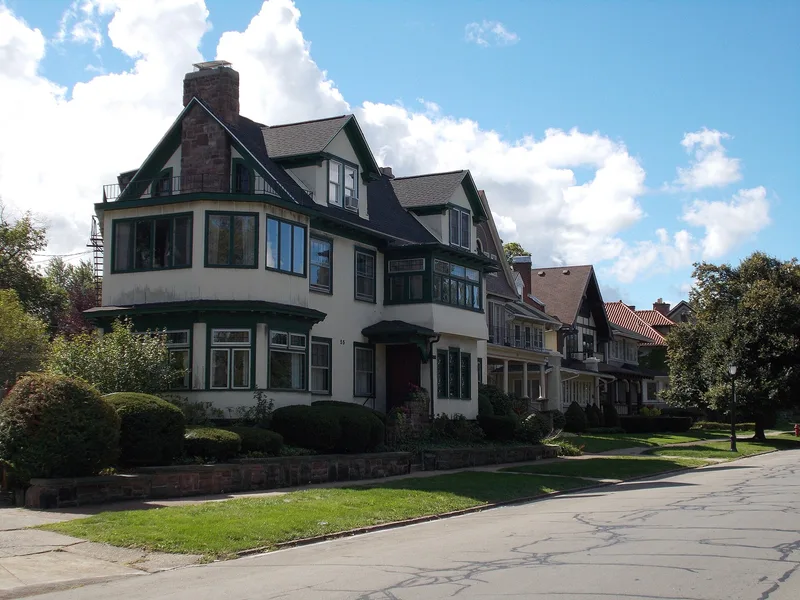
Elmwood Historic District (West) is a residential neighborhood of nearly 300 acres in central Buffalo, built between about 1867 and 1941. Its development began with the parks and parkways designed by Frederick Law Olmsted and Calvert Vaux, which drew new residents and developers. Streetcar lines, including the Elmwood Avenue line opened in 1889, then fueled a building boom, with roughly two houses completed each week between the 1890s and 1910s. No single developer controlled the area, yet builders used a shared vocabulary of popular styles, giving the streets a cohesive look. The district holds 1,988 contributing resources, mostly single and multiple-family houses, apartment buildings, churches and commercial buildings, plus carriage houses, garages and stone hitching posts. Houses are typically two to two-and-a-half stories, with consistent setbacks and mature street trees. Because the street grid and building stock have survived with few demolitions, the district preserves the character of Buffalo's streetcar-era growth, when middle and upper-middle class residents settled here.
Machine-generated summary. This summary was generated by a language model from the official nomination document and has not been reviewed line by line by an editor. It may contain errors. Check the source document before relying on any detail. Source: nomination document (PDF) · catalog entry. Generated October 2026 (model claude-sonnet-5-5, prompt v1.0-2026-10-29).
| Period of significance | ca. 1867-ca. 1941 |
|---|---|
| Styles | Various (see nomination); examples include Queen Anne, Colonial Revival, Craftsman, Tudor Revival, Bungalow and French Renaissance |
| Areas of significance | Architecture, Landscape Architecture, Community Planning and Development |
| Acreage | 296.8 |
| Boundary source | NPS cultural-resource GIS polygon |
| Full listing page | Elmwood Historic District-West (property record) |
What listing means for this property
This is a historic district. Buildings within its boundary are either contributing (they add to the district's significance) or non-contributing. Owners of contributing income-producing buildings can claim the 20% federal rehabilitation tax credit; homeowners should look at state credits. National Register districts impose no design review by themselves; a local historic district ordinance, if one exists, does (the difference explained).
General information, not legal or tax advice. Rules change; confirm with your State Historic Preservation Office or a qualified adviser.