Elmira College Old Campus

Why it's listed
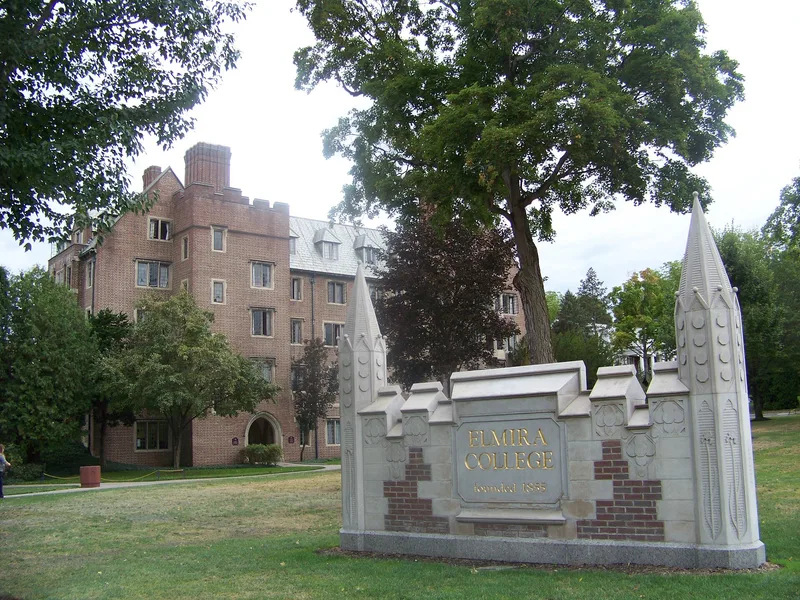
Elmira College Old Campus is a twelve-acre cluster of nine buildings at the southwest end of the college grounds in Elmira, New York. The buildings, dating from 1855 to 1927, sit in a park-like setting around a one-acre pond. Cowles Hall, the original building, follows an octagonal plan and once held the entire college. Later additions include Gillett Hall, Fassett Commons, Carnegie Science Hall, and the Collegiate Gothic Hamilton and Tompkins Halls. Hamilton House, a circa 1870 residence, became a dormitory, and Mark Twain's Study, built in 1874 and moved here from Quarry Farm in 1952, completes the group. The district was listed because the college, chartered in 1855, was the first to give women admission and degree requirements equal to those of men's colleges, and it served as a model for later institutions. The buildings also show the college's growth over roughly seventy years in a variety of styles with little exterior change. Only Alumni Dormitory, built in 1959, is non-contributing.
Machine-generated summary. This summary was generated by a language model from the official nomination document and has not been reviewed line by line by an editor. It may contain errors. Check the source document before relying on any detail. Source: nomination document (PDF) · catalog entry. Generated October 2026 (model claude-sonnet-5-5, prompt v1.0-2026-10-29).
| Period of significance | 1855-1927 |
|---|---|
| Styles | Romanesque, Neoclassical Revival, Collegiate Gothic, Stick style, and vernacular/picturesque residential |
| Areas of significance | Education, Architecture |
| Acreage | 12 |
| Boundary source | NPS cultural-resource GIS polygon |
| Full listing page | Elmira College Old Campus (property record) |
What listing means for this property
This is a historic district. Buildings within its boundary are either contributing (they add to the district's significance) or non-contributing. Owners of contributing income-producing buildings can claim the 20% federal rehabilitation tax credit; homeowners should look at state credits. National Register districts impose no design review by themselves; a local historic district ordinance, if one exists, does (the difference explained).
General information, not legal or tax advice. Rules change; confirm with your State Historic Preservation Office or a qualified adviser.