Elmira Civic Historic District (Additional Documentation)

Why it's listed
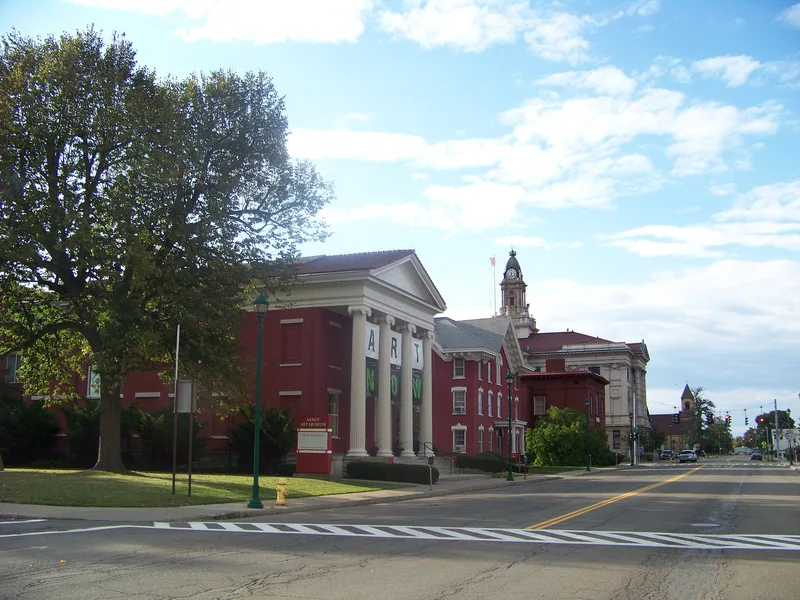
Downtown Elmira's civic core is a T-shaped district formed by East Church and Lake Streets, covering about 18 acres north of the Chemung River. It holds county buildings, the city hall, an armory used for city offices, a post office, a YMCA and YWCA, private clubs, a library, an art museum and a church. Styles run from the Greek Revival Arnot mansion of about 1835 and the Italianate commercial blocks rebuilt after a 1866 fire, to the 1895 Beaux-Arts City Hall with terra-cotta ornament and the Neo-Classical Post Office of 1902. Much of the work came from local architects Joseph Pierce and H.H. Bickford, who designed seven buildings in the district and altered five more. The area grew from the county seat's early government buildings on Lake Street and from Elmira's canal, railroad and Civil War era prosperity. Urban renewal left the surrounding blocks with empty lots and modern buildings, which sets the intact district apart.
Machine-generated summary. This summary was generated by a language model from the official nomination document and has not been reviewed line by line by an editor. It may contain errors. Check the source document before relying on any detail. Source: nomination document (PDF) · catalog entry. Generated October 2026 (model claude-sonnet-5-5, prompt v1.0-2026-10-29).
| Period of significance | 1800-1899 and 1900-1925 |
|---|---|
| Styles | Varied: Greek Revival, Italianate, Second Empire, Richardsonian Romanesque, Beaux-Arts, Neo-Classical, Renaissance Revival, Sullivanesque, Colonial Revival |
| Areas of significance | Art, Politics/Government, Architecture, Community Planning and Development |
| Acreage | 18 |
| Boundary source | NPS cultural-resource GIS polygon |
| Full listing page | Elmira Civic Historic District (Additional Documentation) (property record) |
What listing means for this property
This is a historic district. Buildings within its boundary are either contributing (they add to the district's significance) or non-contributing. Owners of contributing income-producing buildings can claim the 20% federal rehabilitation tax credit; homeowners should look at state credits. National Register districts impose no design review by themselves; a local historic district ordinance, if one exists, does (the difference explained).
General information, not legal or tax advice. Rules change; confirm with your State Historic Preservation Office or a qualified adviser.