East Main-Mechanic Streets Historic District

Why it's listed
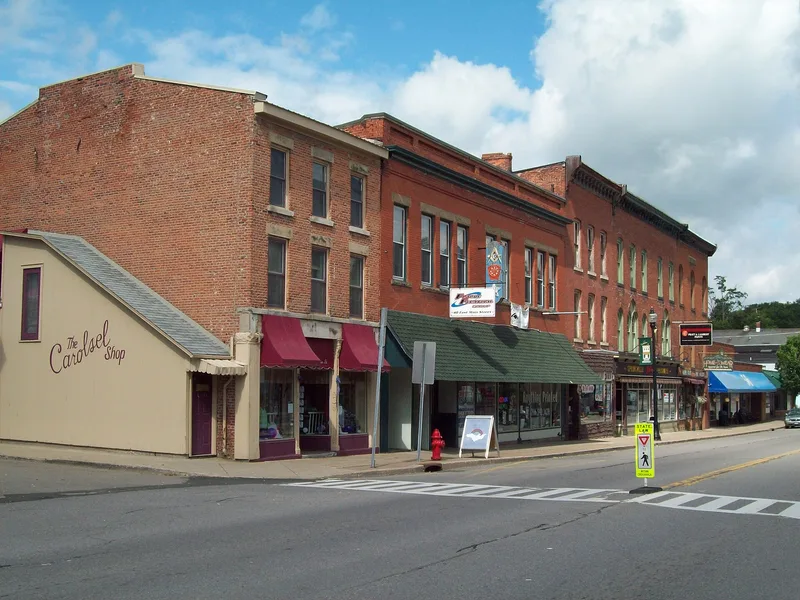
Springville's commercial core along East Main Street, together with two buildings on Mechanic Street, forms a district of about 5.5 acres on flat ground. It contains 24 contributing and 2 noncontributing buildings, built between about 1850 and 1924. Most are two- to three-story attached brick blocks, many in the Italianate style, with cast iron, stone and pressed metal ornament. Similar scale, materials, rooflines and setbacks give the street a cohesive look, even though many storefronts have been modernized. The earliest styles include a Greek Revival former residence at 31 East Main Street. The Leland House, a frame Second Empire hotel of about 1879 with a mansard roof and tall tower, is among the most striking buildings. The R. B. Waite Building of about 1912 housed the Antidolar Manufacturing Company, a maker of local anaesthetic. Together the buildings record the growth of the village's business life, including its hotels, shops, fires and improvements. The district is still used for commerce, with shops, offices and restaurants.
Machine-generated summary. This summary was generated by a language model from the official nomination document and has not been reviewed line by line by an editor. It may contain errors. Check the source document before relying on any detail. Source: nomination document (PDF) · catalog entry. Generated October 2026 (model claude-sonnet-5-5, prompt v1.0-2026-10-29).
| Styles | Mid-19th Century Greek Revival; Late Victorian Italianate, Second Empire, Neo-Grec |
|---|---|
| Areas of significance | Architecture, Commerce |
| Acreage | 5.5 |
| Boundary source | NPS cultural-resource GIS polygon |
| Full listing page | East Main-Mechanic Streets Historic District (property record) |
What listing means for this property
This is a historic district. Buildings within its boundary are either contributing (they add to the district's significance) or non-contributing. Owners of contributing income-producing buildings can claim the 20% federal rehabilitation tax credit; homeowners should look at state credits. National Register districts impose no design review by themselves; a local historic district ordinance, if one exists, does (the difference explained).
General information, not legal or tax advice. Rules change; confirm with your State Historic Preservation Office or a qualified adviser.