East 73rd Street Historic District

The National Park Service has not published a boundary polygon for this district; the map shows the listed properties inside it and the district's reference point.
Why it's listed
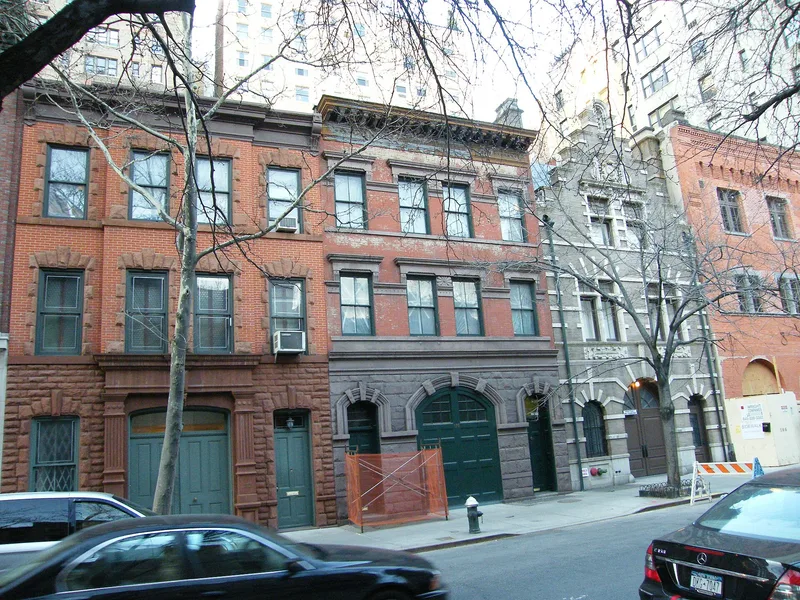
Fifteen small-scale buildings on East 73rd Street between Lexington and Third Avenues form a rare pocket of carriage-era Manhattan, hemmed in by high-rise apartment towers. Eleven were built as private carriage houses for wealthy New Yorkers, among them Edward Harkness, Joseph Pulitzer and Henry T. Sloane. Two Italianate rowhouses from 1860 survive from the street's first development, alongside a commercial stable and an early commercial garage dating to 1906. The designs range from simple vernacular work to high-style Romanesque Revival, Beaux-Arts and neo-Flemish buildings, with architects including Richard Morris Hunt and Charles Romeyn. Ground floors held carriages and horse stalls, with rooms above for coachmen and grooms. As automobiles replaced carriages, the buildings became garages and chauffeurs' quarters, and later most became stylish private homes. Alterations have been modest, mostly to carriage doors. The block is recognized as the only cohesive group of carriage houses in Manhattan.
Machine-generated summary. This summary was generated by a language model from the official nomination document and has not been reviewed line by line by an editor. It may contain errors. Check the source document before relying on any detail. Source: nomination document (PDF) · catalog entry. Generated October 2026 (model claude-sonnet-5-5, prompt v1.0-2026-10-29).
| Period of significance | 1860-1920 |
|---|---|
| Styles | Carriage houses in Romanesque Revival, Beaux-Arts, neo-Flemish, neo-Grec and Queen Anne styles; Italianate rowhouses |
| Areas of significance | Architecture |
| Acreage | 1.4 |
| Boundary source | not published |
| Full listing page | East 73rd Street Historic District (property record) |
What listing means for this property
This is a historic district. Buildings within its boundary are either contributing (they add to the district's significance) or non-contributing. Owners of contributing income-producing buildings can claim the 20% federal rehabilitation tax credit; homeowners should look at state credits. National Register districts impose no design review by themselves; a local historic district ordinance, if one exists, does (the difference explained).
General information, not legal or tax advice. Rules change; confirm with your State Historic Preservation Office or a qualified adviser.