Douglaston Historic District

Why it's listed
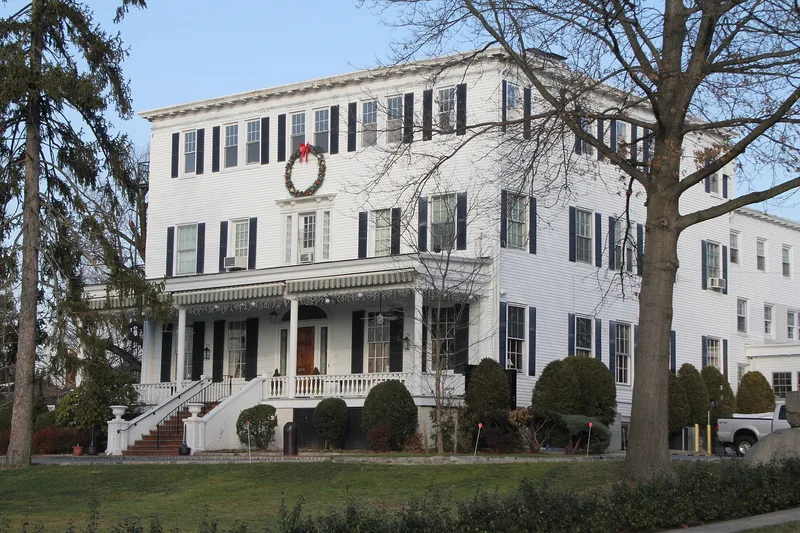
Douglaston Historic District covers more than 600 houses along landscaped streets on a mile-long peninsula reaching into Little Neck Bay, at the northeastern edge of Queens. Most homes belong to Douglas Manor, a planned suburb developed by the Rickert-Finlay Company after Queens became part of Greater New York in 1898. The suburb was laid out on the grounds of a nineteenth-century estate created by George Douglas, and much of that estate's landscaping survives, including specimen trees and a white oak believed to be 600 years old. Covenants guided the plan, which includes a shared shorefront, winding streets following the land, and houses ranging from large mansions along Shore Road to modest cottages near Udalls Cove. Styles include Colonial Revival, Tudor Revival, English cottage, Arts and Crafts, Craftsman and Mediterranean Revival, mostly by local architects. Earlier survivors include the c.1735 Van Wyck House and the c.1819 Van Zandt manor house. Eight houses are by Josephine Wright Chapman.
Machine-generated summary. This summary was generated by a language model from the official nomination document and has not been reviewed line by line by an editor. It may contain errors. Check the source document before relying on any detail. Source: nomination document (PDF) · catalog entry. Generated October 2026 (model claude-sonnet-5-5, prompt v1.0-2026-10-29).
| Styles | Late 19th and early 20th century revivals: Colonial Revival, Tudor Revival, Mission/Spanish Colonial Revival, Bungalow/Craftsman |
|---|---|
| Areas of significance | Architecture, Community Planning and Development |
| Acreage | 197 |
| Boundary source | NPS cultural-resource GIS polygon |
| Full listing page | Douglaston Historic District (property record) |
What listing means for this property
This is a historic district. Buildings within its boundary are either contributing (they add to the district's significance) or non-contributing. Owners of contributing income-producing buildings can claim the 20% federal rehabilitation tax credit; homeowners should look at state credits. National Register districts impose no design review by themselves; a local historic district ordinance, if one exists, does (the difference explained).
General information, not legal or tax advice. Rules change; confirm with your State Historic Preservation Office or a qualified adviser.