Delaware Avenue Historic District

Why it's listed
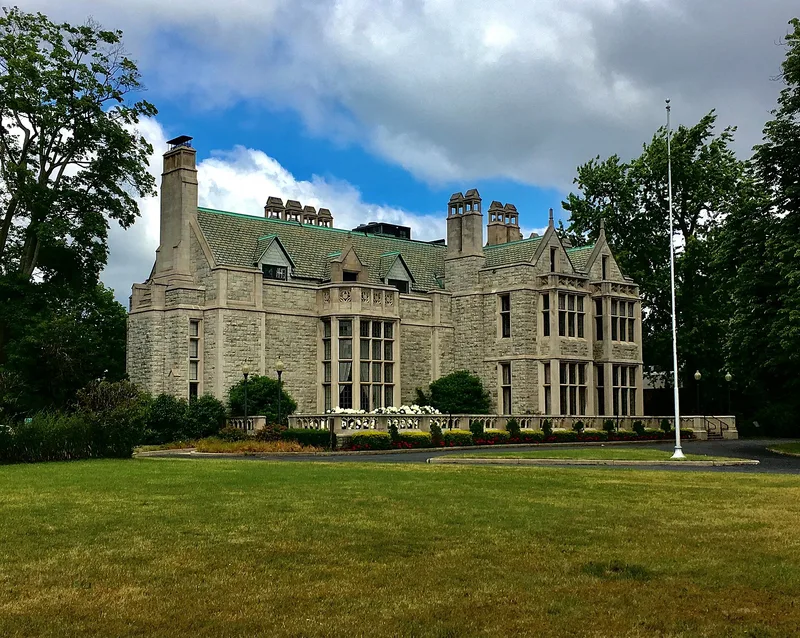
Fourteen large buildings along the west side of Delaware Avenue in Buffalo, between North and Bryant Streets, make up this two-block district. Set back on broad lawns behind tree-lined sidewalks, they are the last surviving stretch of an avenue once praised as one of the finest residential streets in the country. Westminster Presbyterian Church, built in 1858, and a nearby brick cottage-like house are the only mid-nineteenth-century buildings. The rest were built mostly between 1890 and the First World War for the city's business leaders. Notable designs include a pair of houses by McKim, Meade and White for the Williams family, a Gothic residence by Edward Green for Stephen Clement, and a Renaissance Revival villa by Charles Pierrepont H. Gilbert for Seymour Knox. Buffalo's prosperity, boosted by the 1901 Pan-American Exposition, drove this wave of building. Many of the houses are now used by charitable, educational and religious organizations, which has helped keep the turn-of-the-century character of the street.
Machine-generated summary. This summary was generated by a language model from the official nomination document and has not been reviewed line by line by an editor. It may contain errors. Check the source document before relying on any detail. Source: nomination document (PDF) · catalog entry. Generated October 2026 (model claude-sonnet-5-5, prompt v1.0-2026-10-29).
| Styles | Late 19th and early 20th century residential styles, including Renaissance Revival, Gothic (English manor house model), half-timbered and pseudo-Georgian |
|---|---|
| Areas of significance | Industry, Architecture, Social History |
| Acreage | 15 |
| Boundary source | NPS cultural-resource GIS polygon |
| Full listing page | Delaware Avenue Historic District (property record) |
What listing means for this property
This is a historic district. Buildings within its boundary are either contributing (they add to the district's significance) or non-contributing. Owners of contributing income-producing buildings can claim the 20% federal rehabilitation tax credit; homeowners should look at state credits. National Register districts impose no design review by themselves; a local historic district ordinance, if one exists, does (the difference explained).
General information, not legal or tax advice. Rules change; confirm with your State Historic Preservation Office or a qualified adviser.