Court Street Historic District

Why it's listed
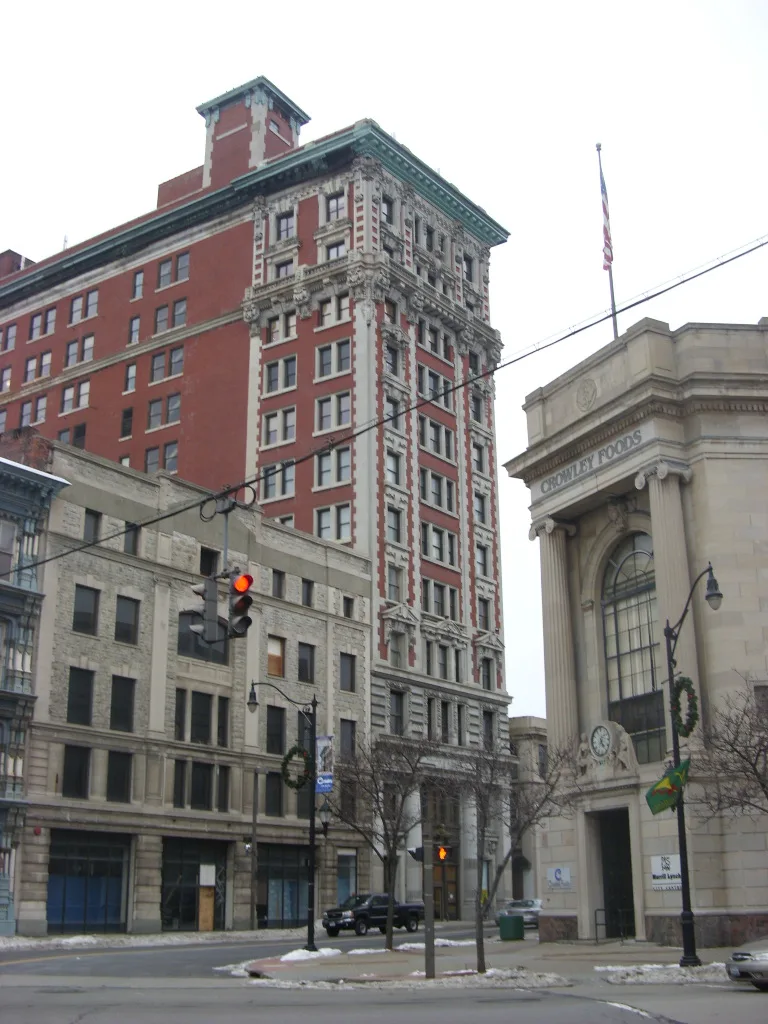
Court Street Historic District covers the historic commercial and civic core of downtown Binghamton, New York, on both sides of Court Street east of the Chenango River. It contains 104 buildings, 89 of them contributing, built between about 1840 and 1939. Most are three- to six-story brick commercial buildings standing side by side along a grid of streets, with taller towers such as the ten-story Security Mutual Building and the twelve-story Press Building near the center. The domed Broome County Courthouse and the Old City Hall, both listed separately, anchor the district. Styles run from small Greek Revival stores of the 1840s through Italianate, Romanesque Revival, Beaux-Arts and Neoclassical designs to the Art Deco Justice Building of 1939. The district matters because it traces Binghamton's growth after the Chenango Canal opened in 1837, including expansion tied to the cigar and rail industries, and its role as a financial center and seat of government.
Machine-generated summary. This summary was generated by a language model from the official nomination document and has not been reviewed line by line by an editor. It may contain errors. Check the source document before relying on any detail. Source: nomination document (PDF) · catalog entry. Generated October 2026 (model claude-sonnet-5-5, prompt v1.0-2026-10-29).
| Period of significance | c.1840-1939 |
|---|---|
| Styles | Wide range, including Greek Revival, Italianate, Romanesque Revival, Beaux-Arts, Neoclassical and Art Deco |
| Areas of significance | Architecture |
| Acreage | 33 |
| Boundary source | NPS cultural-resource GIS polygon |
| Full listing page | Court Street Historic District (property record) |
What listing means for this property
This is a historic district. Buildings within its boundary are either contributing (they add to the district's significance) or non-contributing. Owners of contributing income-producing buildings can claim the 20% federal rehabilitation tax credit; homeowners should look at state credits. National Register districts impose no design review by themselves; a local historic district ordinance, if one exists, does (the difference explained).
General information, not legal or tax advice. Rules change; confirm with your State Historic Preservation Office or a qualified adviser.