Cottage Row Historic District

Why it's listed
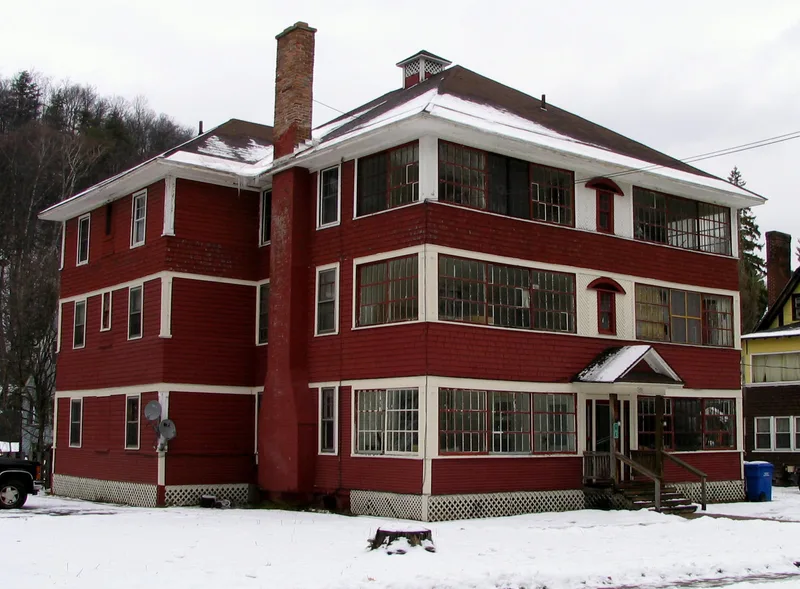
Cottage Row is a three-block stretch of Park Avenue in Saranac Lake, New York, lined with wood-frame houses built mostly between 1907 and 1917 on the slope of Mount Pisgah. Nearly every house was used at some point as a private sanatorium for tuberculosis patients, from small family homes with a porch for one lodger to commercial cure cottages housing as many as 25 people. Features typical of the type include glazed sleeping porches, extra-wide doorways and call bell systems. Styles include Colonial Revival, Tudor Revival and Queen Anne, and local architects Scopes and Feustmann designed several of the stucco and half-timbered houses. One cottage, at 80 Park Avenue, is described as the largest surviving sanatorium of its kind designed as a single unit; Philippine president Manuel Quezon died there in 1944. The district was listed for its architecture and its concentration of intact cure cottages, which retain their original curing features and a high degree of integrity.
Machine-generated summary. This summary was generated by a language model from the official nomination document and has not been reviewed line by line by an editor. It may contain errors. Check the source document before relying on any detail. Source: nomination document (PDF) · catalog entry. Generated October 2026 (model claude-sonnet-5-5, prompt v1.0-2026-10-29).
| Period of significance | ca.19 - ca.1940 |
|---|---|
| Styles | Late 19th & 20th Century Revivals: Colonial Revival, Tudor Revival, Shingle Style |
| Areas of significance | Health/Medicine, Architecture |
| Acreage | 5 |
| Boundary source | NPS cultural-resource GIS polygon |
| Full listing page | Cottage Row Historic District (property record) |
What listing means for this property
This is a historic district. Buildings within its boundary are either contributing (they add to the district's significance) or non-contributing. Owners of contributing income-producing buildings can claim the 20% federal rehabilitation tax credit; homeowners should look at state credits. National Register districts impose no design review by themselves; a local historic district ordinance, if one exists, does (the difference explained).
General information, not legal or tax advice. Rules change; confirm with your State Historic Preservation Office or a qualified adviser.