Cornelia-Putnam Historic District

The National Park Service has not published a boundary polygon for this district; the map shows the listed properties inside it and the district's reference point.
Why it's listed
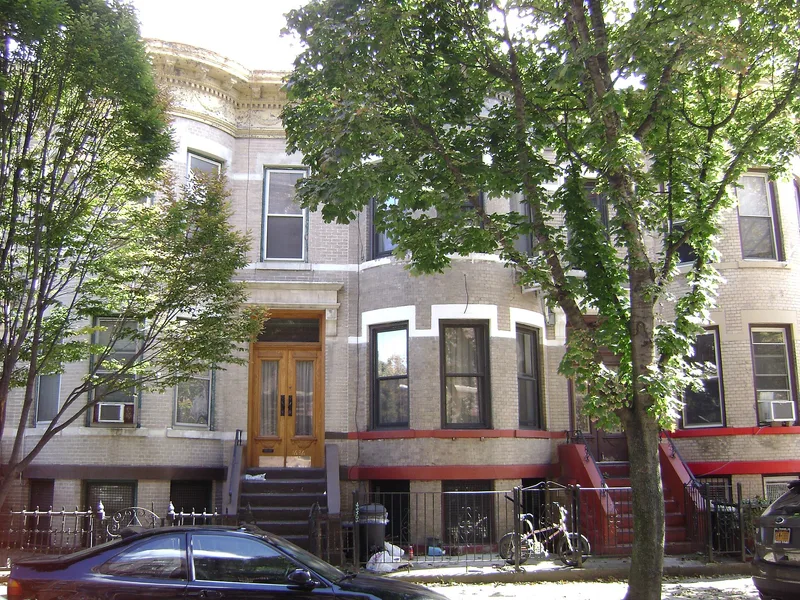
Cornelia Street and Putnam Avenue in Ridgewood, Queens, hold a small district of 87 brick buildings covering about six acres between Wyckoff and Myrtle Avenues. Two-story houses with an apartment on each floor and three-story tenements with two apartments per floor were built in separate rows between 1907 and 1922. Facades use yellow, amber or cream brick with brownstone or cast-stone trim, pressed metal cornices and elaborate ironwork, with Romanesque and Renaissance Revival details. Different builders hired the same architect, Louis Berger and Co., which produced consistent setbacks, scale and materials. Central buildings in each row sit back to form small gardens, while end buildings reach the lot line to define the row. The district was listed as a compact example of how Ridgewood's larger neighborhoods developed, and for its integrity: pressed metal entablatures, most original double doors and much ironwork survive. Only two 1960s houses disrupt the historic character.
Machine-generated summary. This summary was generated by a language model from the official nomination document and has not been reviewed line by line by an editor. It may contain errors. Check the source document before relying on any detail. Source: nomination document (PDF) · catalog entry. Generated October 2026 (model claude-sonnet-5-5, prompt v1.0-2026-10-29).
| Period of significance | 1907-1922 |
|---|---|
| Styles | Applied Romanesque Revival and Renaissance Revival details |
| Areas of significance | Architecture |
| Acreage | 6 |
| Boundary source | not published |
| Full listing page | Cornelia-Putnam Historic District (property record) |
What listing means for this property
This is a historic district. Buildings within its boundary are either contributing (they add to the district's significance) or non-contributing. Owners of contributing income-producing buildings can claim the 20% federal rehabilitation tax credit; homeowners should look at state credits. National Register districts impose no design review by themselves; a local historic district ordinance, if one exists, does (the difference explained).
General information, not legal or tax advice. Rules change; confirm with your State Historic Preservation Office or a qualified adviser.