Cole-Hasbrouck Farm Historic District

Why it's listed
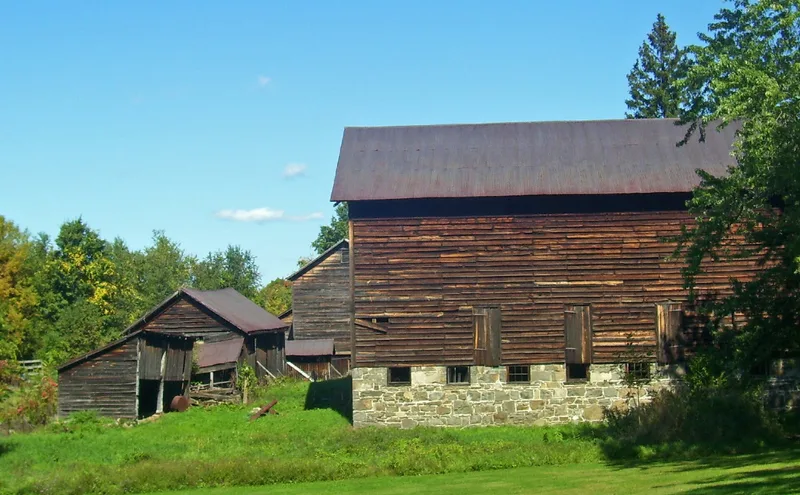
Cole-Hasbrouck Farm is a 68-acre complex at the crossroads hamlet of Modena, in southeastern Ulster County, New York. At its center is a two-story brick and stone house built around 1820 by John Cole, a lawyer and land speculator who assembled more than 1,000 acres nearby. The house has a five-bay Flemish bond facade, parapeted end walls with paired chimneys, and a central passage whose plaster walls imitate marble with lampblack and marble chips. Later additions include a 1907 dining wing and large porches from the 1920s. Around the house are gardens, a farmyard of barns and outbuildings, fields, and hamlet properties such as a hotel and blacksmith shop. Cole and his heirs in the Noyes and Hasbrouck families leased, managed or built these components, shaping the growth of Modena. Though land sales have reduced the original holding, the home farm and its core features remain largely intact, illustrating farming, commerce and local building traditions in the Wallkill Valley.
Machine-generated summary. This summary was generated by a language model from the official nomination document and has not been reviewed line by line by an editor. It may contain errors. Check the source document before relying on any detail. Source: nomination document (PDF) · catalog entry. Generated October 2026 (model claude-sonnet-5-5, prompt v1.0-2026-10-29).
| Styles | Early Republic; Other, vernacular c1820-c1920 |
|---|---|
| Areas of significance | Community Planning and Development, Agriculture, Architecture |
| Acreage | 68.2 |
| Boundary source | NPS cultural-resource GIS polygon |
| Full listing page | Cole-Hasbrouck Farm Historic District (property record) |
What listing means for this property
This is a historic district. Buildings within its boundary are either contributing (they add to the district's significance) or non-contributing. Owners of contributing income-producing buildings can claim the 20% federal rehabilitation tax credit; homeowners should look at state credits. National Register districts impose no design review by themselves; a local historic district ordinance, if one exists, does (the difference explained).
General information, not legal or tax advice. Rules change; confirm with your State Historic Preservation Office or a qualified adviser.