Cobble Hill Historic District

Why it's listed
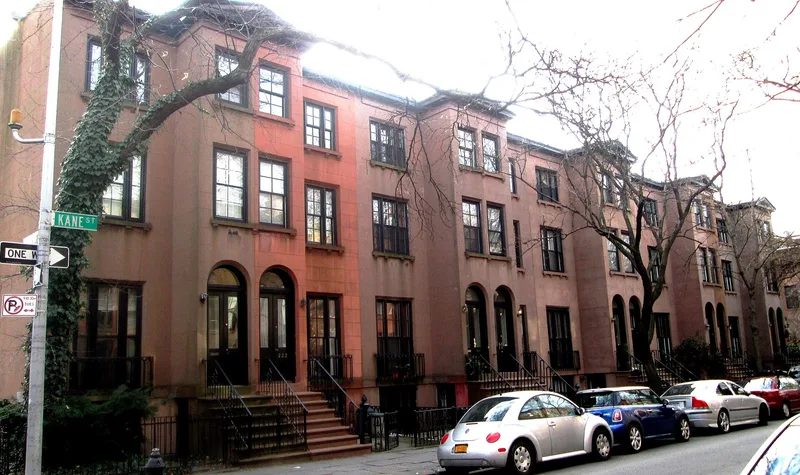
Cobble Hill is a Brooklyn neighborhood of more than twenty-two blocks between Atlantic Avenue, Court, Degraw and Hicks Streets, lying just south of Brooklyn Heights. Residential development began in the mid-1830s with rows of Greek Revival town houses, and later decades added Gothic Revival, Italianate, Neo-Grec, Romanesque Revival and Queen Anne buildings. Brick and brownstone dominate, and the ironwork is notably varied. Two churches stand out: Christ Church, designed by Richard Upjohn in 1841-42, and the Strong Place Baptist Church, designed by Minard Lafever in 1851-52. The district is also known for pioneering low-cost housing financed by Alfred Tredway White in the 1870s, including the Home Buildings, the Tower Buildings and the landscaped Warren Place courtyard of small houses. Twenty buildings added after 1900 match the earlier masonry in scale and quality. Commerce stays mostly on Atlantic Avenue and Court Street, so the interior blocks remain residential.
Machine-generated summary. This summary was generated by a language model from the official nomination document and has not been reviewed line by line by an editor. It may contain errors. Check the source document before relying on any detail. Source: nomination document (PDF) · catalog entry. Generated October 2026 (model claude-sonnet-5-5, prompt v1.0-2026-10-29).
| Styles | Greek Revival, Gothic Revival, Italianate, Romanesque Revival, Neo-Grec, Queen Anne, and early 20th-century Beaux Arts, Colonial Revival and Art Deco |
|---|---|
| Areas of significance | Community Planning and Development, Architecture |
| Acreage | 60 |
| Boundary source | NPS cultural-resource GIS polygon |
| Full listing page | Cobble Hill Historic District (property record) |
What listing means for this property
This is a historic district. Buildings within its boundary are either contributing (they add to the district's significance) or non-contributing. Owners of contributing income-producing buildings can claim the 20% federal rehabilitation tax credit; homeowners should look at state credits. National Register districts impose no design review by themselves; a local historic district ordinance, if one exists, does (the difference explained).
General information, not legal or tax advice. Rules change; confirm with your State Historic Preservation Office or a qualified adviser.