Clinton Avenue Historic District

Why it's listed
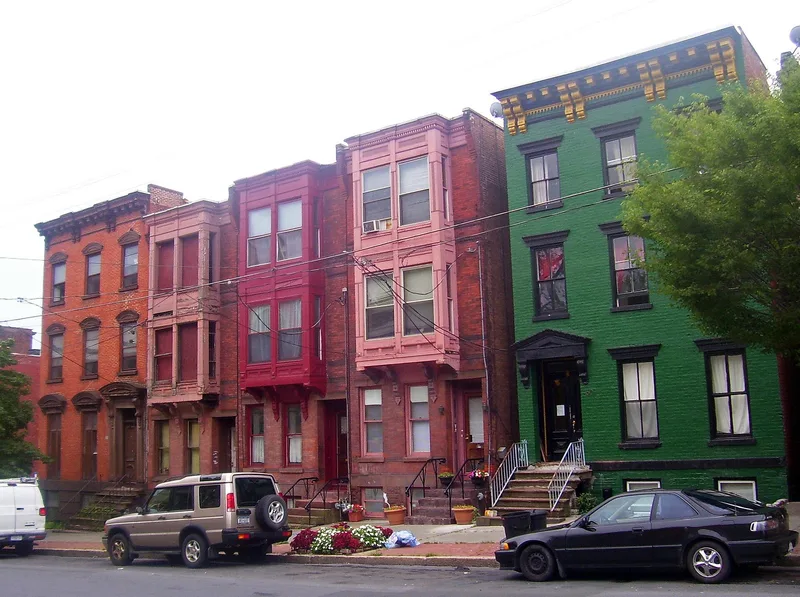
Clinton Avenue Historic District occupies a long, spine-like area just north of downtown Albany, following Clinton Avenue from North Pearl Street west to Quail Street. Along with parts of North Pearl, Lark, Elk, Lexington and First streets, it holds 576 buildings, all but twenty of which contribute to its character. Most are two- or three-story attached masonry townhouses with projecting stoops, built speculatively for middle-class residents between about 1830 and 1900. Italianate details such as bracketed cornices and iron hoods are common, and Queen Anne touches appear on later rows. The oldest surviving building is probably 3 Clinton Place, dating from 1833. Churches, schools, a former police station and the Palace Theatre add institutional variety. Demolition in the 1960s and 1970s left gaps in the eastern part, yet most blockfaces remain nearly unbroken rows of nineteenth-century houses. The district was listed because it preserves the largest surviving concentration of this rowhouse building type in northern Albany.
Machine-generated summary. This summary was generated by a language model from the official nomination document and has not been reviewed line by line by an editor. It may contain errors. Check the source document before relying on any detail. Source: nomination document (PDF) · catalog entry. Generated October 2026 (model claude-sonnet-5-5, prompt v1.0-2026-10-29).
| Styles | Italianate, Queen Anne, Georgian Revival and other nineteenth-century rowhouse styles |
|---|---|
| Areas of significance | Community Planning and Development, Architecture |
| Acreage | 70 |
| Boundary source | NPS cultural-resource GIS polygon |
| Full listing page | Clinton Avenue Historic District (property record) |
What listing means for this property
This is a historic district. Buildings within its boundary are either contributing (they add to the district's significance) or non-contributing. Owners of contributing income-producing buildings can claim the 20% federal rehabilitation tax credit; homeowners should look at state credits. National Register districts impose no design review by themselves; a local historic district ordinance, if one exists, does (the difference explained).
General information, not legal or tax advice. Rules change; confirm with your State Historic Preservation Office or a qualified adviser.