Clifton Springs Sanitarium Historic District

The National Park Service has not published a boundary polygon for this district; the map shows the listed properties inside it and the district's reference point.
Why it's listed
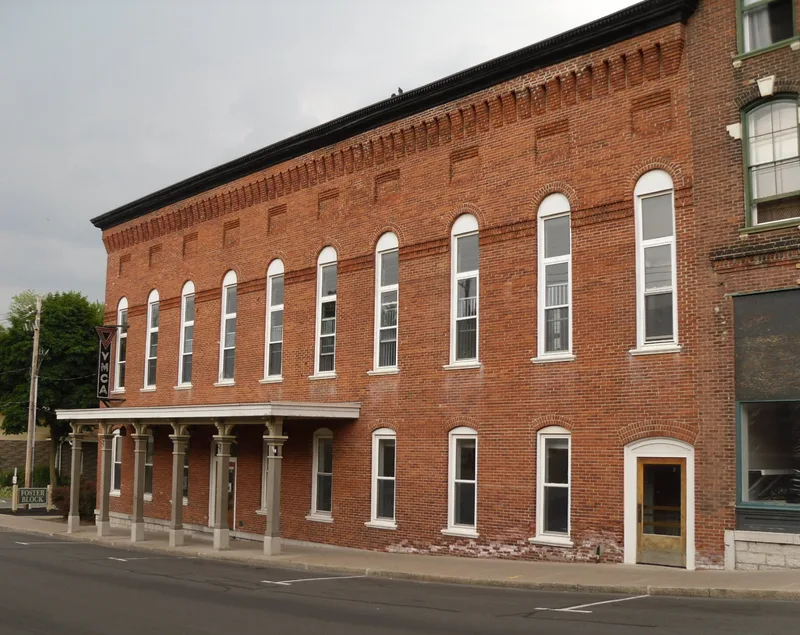
This cluster of buildings and grounds on East Main Street in Clifton Springs preserves what remains of the Clifton Springs Sanitarium, a medical institution that shaped the village from the mid-nineteenth century into the early twentieth. Dr. Henry Foster founded it as a water cure in 1849. The district includes the Foster Cottage (1854), the Foster Block (1865), the YMCA (1879), the five-story brick sanitarium of 1896, Maxwell Hall (1926) and the Woodbury Building (1927), plus part of the original landscaped grounds. The sanitarium's chapel holds a Tiffany favrile glass mosaic of the Last Supper. The institution blended religious, allopathic, homeopathic and water-cure practices, which the nomination describes as unusual. Some features were lost, including two open-air pavilions, and the main building was altered in 1974. The complex nevertheless keeps nearly all its original buildings in their historic relationships. Its institutional descendant, the Clifton Springs Hospital and Clinic, continues on the site.
Machine-generated summary. This summary was generated by a language model from the official nomination document and has not been reviewed line by line by an editor. It may contain errors. Check the source document before relying on any detail. Source: nomination document (PDF) · catalog entry. Generated October 2026 (model claude-sonnet-5-5, prompt v1.0-2026-10-29).
| Styles | Gothic Revival, Romanesque, Classical Revival |
|---|---|
| Areas of significance | Health/Medicine, Architecture |
| Acreage | 7.5 |
| Boundary source | not published |
| Full listing page | Clifton Springs Sanitarium Historic District (property record) |
What listing means for this property
This is a historic district. Buildings within its boundary are either contributing (they add to the district's significance) or non-contributing. Owners of contributing income-producing buildings can claim the 20% federal rehabilitation tax credit; homeowners should look at state credits. National Register districts impose no design review by themselves; a local historic district ordinance, if one exists, does (the difference explained).
General information, not legal or tax advice. Rules change; confirm with your State Historic Preservation Office or a qualified adviser.