City and Suburban Homes Company's First Avenue Estate Historic District

The National Park Service has not published a boundary polygon for this district; the map shows the listed properties inside it and the district's reference point.
Why it's listed
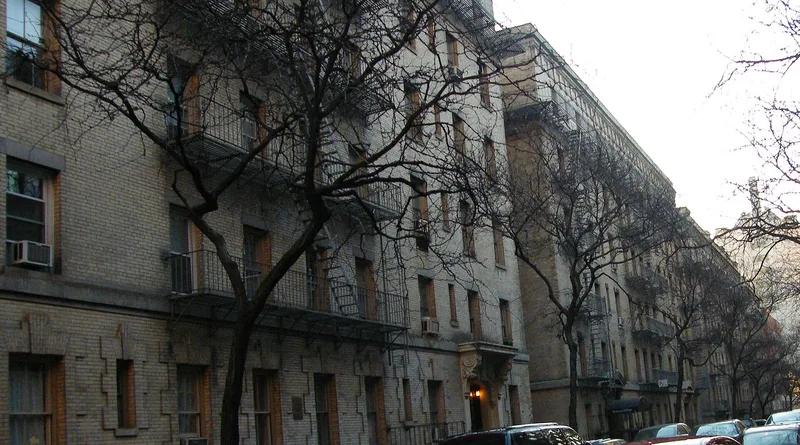
Thirteen six-story brick tenements fill a full Manhattan block between First and York Avenues and East 64th and 65th Streets. The City and Suburban Homes Company built them between 1898 and 1915 as model housing for working people. James E. Ware & Son designed eleven of the buildings, and Philip Ohm, the company's chief architect, designed the last two. All are faced in light yellow or tan brick, rise to a common cornice line, and carry limited Beaux-Arts ornament such as cartouches, garlands and brackets, mostly at the entrances. Their planning mattered more than their decoration. Combining several standard 25-foot lots allowed large central, side and rear courts, so every apartment had windows, light and air. Halls were fireproofed, and apartments had running water, water closets and radiators, which speculator-built tenements generally lacked. The company paid investors a limited dividend, and vacancies were rare. The district retains a high degree of integrity and the earliest surviving buildings of the company, which makes it a record of New York's housing reform movement.
Machine-generated summary. This summary was generated by a language model from the official nomination document and has not been reviewed line by line by an editor. It may contain errors. Check the source document before relying on any detail. Source: nomination document (PDF) · catalog entry. Generated October 2026 (model claude-sonnet-5-5, prompt v1.0-2026-10-29).
| Period of significance | 1898-1915 |
|---|---|
| Styles | Beaux-Arts detail |
| Areas of significance | Architecture, Social History |
| Acreage | 2.8 |
| Boundary source | not published |
| Full listing page | City and Suburban Homes Company's First Avenue Estate Historic District (property record) |
What listing means for this property
This is a historic district. Buildings within its boundary are either contributing (they add to the district's significance) or non-contributing. Owners of contributing income-producing buildings can claim the 20% federal rehabilitation tax credit; homeowners should look at state credits. National Register districts impose no design review by themselves; a local historic district ordinance, if one exists, does (the difference explained).
General information, not legal or tax advice. Rules change; confirm with your State Historic Preservation Office or a qualified adviser.