Chestnut Street Historic District

Why it's listed
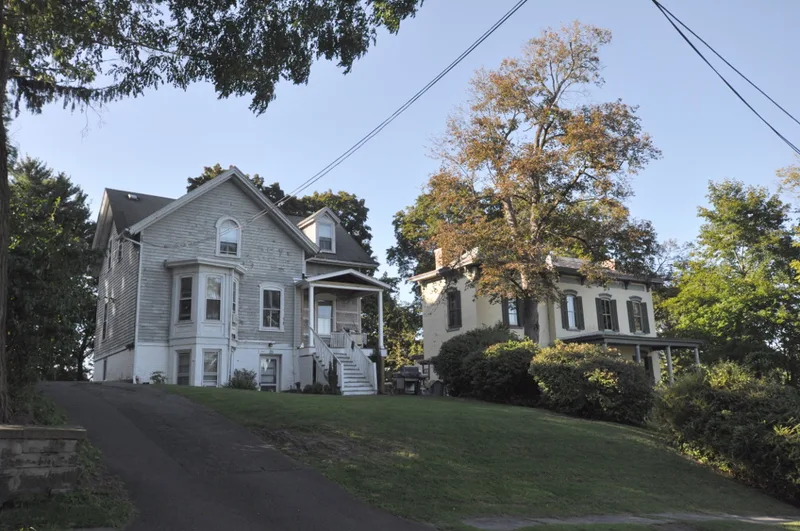
Chestnut Street Historic District is a hillside residential neighborhood in Kingston, New York, set along a ridge that separates the historic centers of Rondout and Kingston. About 22 acres in size, it includes parts of Chestnut, Broadway, Stuyvesant and Livingston Streets and holds 44 contributing buildings and six contributing structures. Houses date from about 1855 to 1919 and show Italianate, French Second Empire, Queen Anne, Colonial Revival, Tudor Revival and Italian Renaissance styles. Notable examples include the bluestone Henry Samson house, the remodelled Dr. Abraham Crispell house, the Queen Anne George Coykendall house and the Immanuel Lutheran Church. The neighborhood grew as a home for bankers, merchants, physicians and managers who prospered with Kingston's transportation and building materials industries. Canal superintendent James S. McEntee bought farmland on the ridge in the 1840s and had laid out Chestnut Street by 1853. The boundaries exclude surrounding areas of smaller, altered housing and modern redevelopment.
Machine-generated summary. This summary was generated by a language model from the official nomination document and has not been reviewed line by line by an editor. It may contain errors. Check the source document before relying on any detail. Source: nomination document (PDF) · catalog entry. Generated October 2026 (model claude-sonnet-5-5, prompt v1.0-2026-10-29).
| Styles | Italianate, French Second Empire, Queen Anne, Colonial Revival, Tudor Revival, Italian Renaissance |
|---|---|
| Areas of significance | Architecture |
| Acreage | 22 |
| Boundary source | NPS cultural-resource GIS polygon |
| Full listing page | Chestnut Street Historic District (property record) |
What listing means for this property
This is a historic district. Buildings within its boundary are either contributing (they add to the district's significance) or non-contributing. Owners of contributing income-producing buildings can claim the 20% federal rehabilitation tax credit; homeowners should look at state credits. National Register districts impose no design review by themselves; a local historic district ordinance, if one exists, does (the difference explained).
General information, not legal or tax advice. Rules change; confirm with your State Historic Preservation Office or a qualified adviser.