Chenango Canal Summit Level

Why it's listed
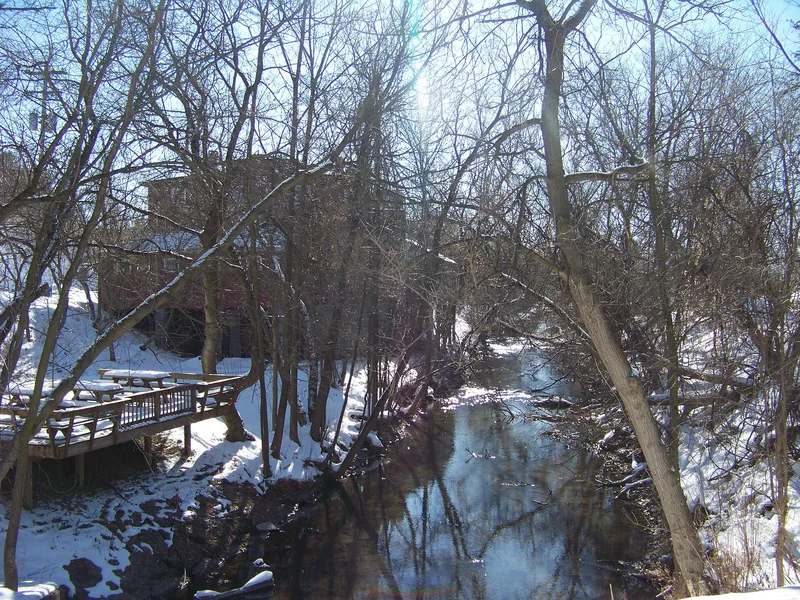
Five miles of the old Chenango Canal, its summit level near Bouckville in Madison County, New York, remain filled with water today. The state built the canal between 1834 and 1836 to link Utica on the Erie Canal with Binghamton on the Susquehanna River, a route requiring 116 locks. The summit stretch needed none, though workers blasted through 25 feet of solid rock for two miles. The canal never succeeded commercially, and railroads in the 1860s took what traffic it had. The state closed it to boats in 1878 but kept the summit as a feeder for the Enlarged Erie Canal, and later for the Erie-Barge Canal, a role it still fills. Since the Chenango was never enlarged, it preserves the dimensions and methods of the original Erie Canal, very little of which survives. Surviving features include the canal prism, the towpath, stone bridge abutments, and the remains of an aqueduct over Oriskany Creek.
Machine-generated summary. This summary was generated by a language model from the official nomination document and has not been reviewed line by line by an editor. It may contain errors. Check the source document before relying on any detail. Source: nomination document (PDF) · catalog entry. Generated October 2026 (model claude-sonnet-5-5, prompt v1.0-2026-10-29).
| Period of significance | 1833-1954 |
|---|---|
| Areas of significance | Transportation, Maritime History, Commerce |
| Boundary source | NPS cultural-resource GIS polygon |
| Full listing page | Chenango Canal Summit Level (property record) |
What listing means for this property
This is a historic district. Buildings within its boundary are either contributing (they add to the district's significance) or non-contributing. Owners of contributing income-producing buildings can claim the 20% federal rehabilitation tax credit; homeowners should look at state credits. National Register districts impose no design review by themselves; a local historic district ordinance, if one exists, does (the difference explained).
General information, not legal or tax advice. Rules change; confirm with your State Historic Preservation Office or a qualified adviser.