Charlton-King-Vandam Historic District

Why it's listed
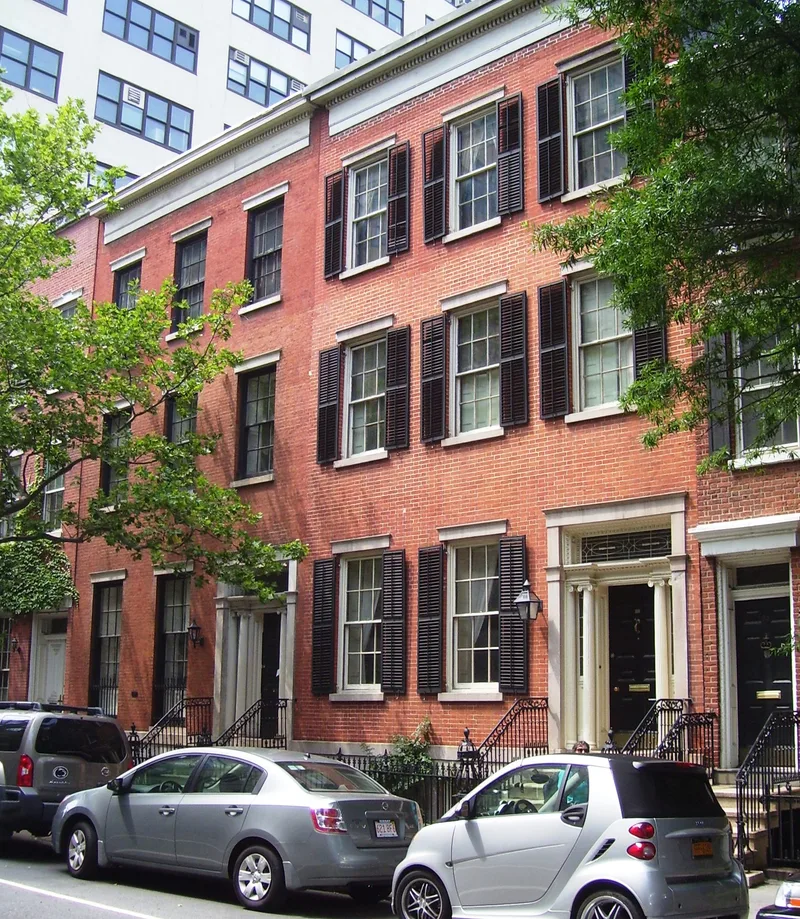
Charlton, King and Vandam Streets in Manhattan form a small residential enclave of Federal and Greek Revival town houses. The land was once the Richmond Hill estate, site of a mansion used by George Washington as headquarters and later owned by Aaron Burr. Burr laid out city lots in 1797, and after his departure from the city John Jacob Astor took over the property. The mansion was rolled down the hill to Charlton and Varick Streets and used as a theatre, the hill was leveled, and local builders put up speculative houses, mostly in the early and mid-1820s. After an 1840 fire, Greek Revival houses replaced four Federal ones on Charlton Street's north side. Early residents included builders, lawyers and merchants, and many houses stayed in the same families for generations. Commercial buildings and trucking arrived at the Varick Street corners in the 1920s, yet the streets kept their domestic character. Original steps, ironwork, dormers and doorways survive, and the district is valued as a homogeneous neighborhood of rare architectural merit.
Machine-generated summary. This summary was generated by a language model from the official nomination document and has not been reviewed line by line by an editor. It may contain errors. Check the source document before relying on any detail. Source: nomination document (PDF) · catalog entry. Generated October 2026 (model claude-sonnet-5-5, prompt v1.0-2026-10-29).
| Styles | Federal and Greek Revival town houses |
|---|---|
| Areas of significance | Architecture |
| Acreage | 5 |
| Boundary source | NPS cultural-resource GIS polygon |
| Full listing page | Charlton-King-Vandam Historic District (property record) |
What listing means for this property
This is a historic district. Buildings within its boundary are either contributing (they add to the district's significance) or non-contributing. Owners of contributing income-producing buildings can claim the 20% federal rehabilitation tax credit; homeowners should look at state credits. National Register districts impose no design review by themselves; a local historic district ordinance, if one exists, does (the difference explained).
General information, not legal or tax advice. Rules change; confirm with your State Historic Preservation Office or a qualified adviser.