Central Avenue Historic District

Why it's listed
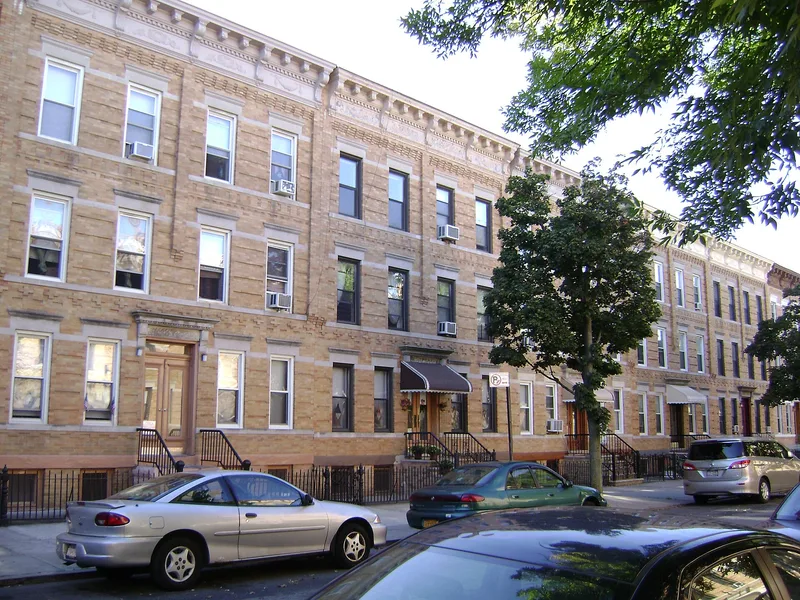
Central Avenue Historic District covers parts of five city blocks in Ridgewood, Queens, and consists of 104 three-story brick tenements on 65th Place and 66th Street, between 70th Avenue and Myrtle Avenue. All were built in 1916 by developer Henry W. Meyer, who hired Louis Berger and Co., described as Ridgewood's most prolific architectural firm. Each building holds two apartments per floor and has amber iron-spot brick patterns, cast-stone lintels and sills, brownstone stoops with ironwork, and pressed metal cornices. Small enclosed front gardens sit behind the lot line. The rows imitate the 'Mathews Flats' model tenements, sharing wide lots, interior airshafts, large windows in every room and separate sanitary facilities in each apartment, though the facade treatment differs. Rows on 66th Street north of Central Avenue have brick parapets instead of metal cornices, reflecting an early move toward simpler detailing. The buildings remain largely intact, with changes mostly limited to doors, ironwork and awnings.
Machine-generated summary. This summary was generated by a language model from the official nomination document and has not been reviewed line by line by an editor. It may contain errors. Check the source document before relying on any detail. Source: nomination document (PDF) · catalog entry. Generated October 2026 (model claude-sonnet-5-5, prompt v1.0-2026-10-29).
| Styles | Romanesque and Renaissance Revival detail |
|---|---|
| Areas of significance | Architecture |
| Acreage | 10 |
| Boundary source | NPS cultural-resource GIS polygon |
| Full listing page | Central Avenue Historic District (property record) |
What listing means for this property
This is a historic district. Buildings within its boundary are either contributing (they add to the district's significance) or non-contributing. Owners of contributing income-producing buildings can claim the 20% federal rehabilitation tax credit; homeowners should look at state credits. National Register districts impose no design review by themselves; a local historic district ordinance, if one exists, does (the difference explained).
General information, not legal or tax advice. Rules change; confirm with your State Historic Preservation Office or a qualified adviser.