Carroll Gardens Historic District

Why it's listed
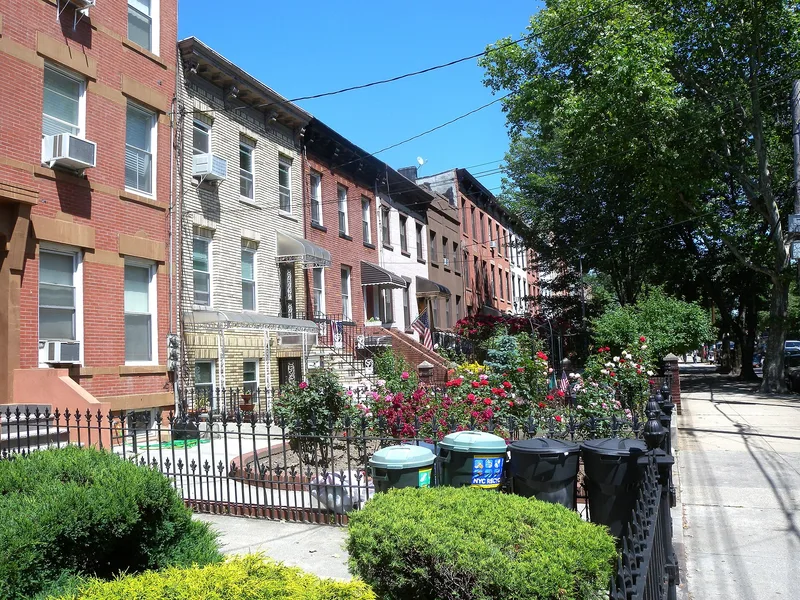
Carroll Gardens Historic District covers about 12 acres in South Brooklyn and includes more than 160 buildings, mostly two- and three-story brownstone rowhouses on Carroll and President Streets between Smith and Hoyt Streets. Built over roughly twenty years from the late 1860s to the early 1880s, the rows reflect the building boom that followed industrial growth in the Red Hook and Gowanus areas. Builders worked to keep setbacks, cornice lines and stoop heights consistent, mostly using late Italianate and neo-Grec designs. The blocks follow an 1846 surveyor's plan that created unusually deep lots, so houses sit behind front yards roughly 25 to 39 feet deep with fenced, landscaped gardens. Both streets are dead ends, which gives the area a secluded feel. Some houses have altered stoops, cornices or facades, and six buildings are considered intrusions, yet the district keeps its nineteenth-century residential character and scale.
Machine-generated summary. This summary was generated by a language model from the official nomination document and has not been reviewed line by line by an editor. It may contain errors. Check the source document before relying on any detail. Source: nomination document (PDF) · catalog entry. Generated October 2026 (model claude-sonnet-5-5, prompt v1.0-2026-10-29).
| Period of significance | 1860s-1880s |
|---|---|
| Styles | Late Italianate and neo-Grec |
| Areas of significance | Community Planning and Development, Architecture |
| Acreage | 12 |
| Boundary source | NPS cultural-resource GIS polygon |
| Full listing page | Carroll Gardens Historic District (property record) |
What listing means for this property
This is a historic district. Buildings within its boundary are either contributing (they add to the district's significance) or non-contributing. Owners of contributing income-producing buildings can claim the 20% federal rehabilitation tax credit; homeowners should look at state credits. National Register districts impose no design review by themselves; a local historic district ordinance, if one exists, does (the difference explained).
General information, not legal or tax advice. Rules change; confirm with your State Historic Preservation Office or a qualified adviser.