Bull-Jackson House

Why it's listed
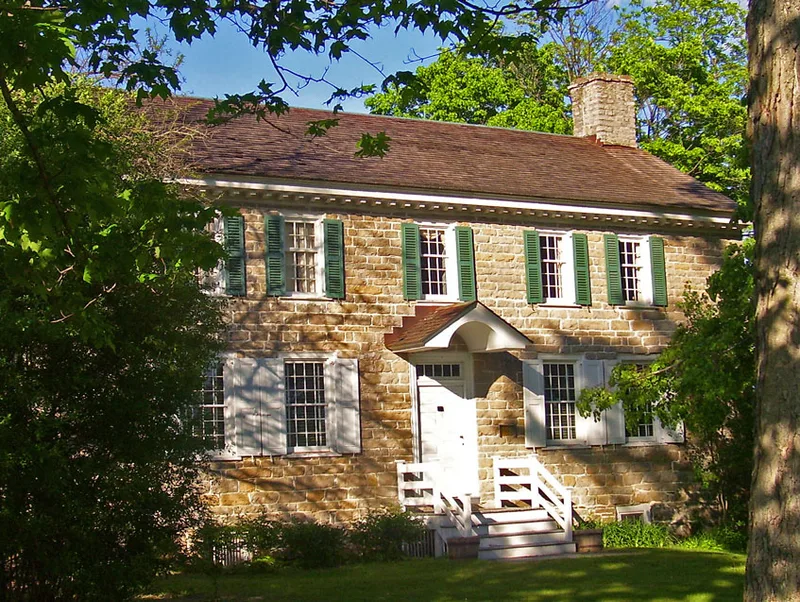
Hillhold is a former farm northwest of Campbell Hall, Orange County, New York, extending from both sides of Route 416 to the Wallkill River. Its main building is a two-story, L-shaped house of hewn native limestone. Thomas Bull built the main block in 1769, and a kitchen wing was added in 1815. Around 1850 the cornices were replaced and a three-bay porch with Greek Revival details was added. Wooden outbuildings include a barn, carriage house, granary, wood shed, smokehouse and privy. The farm reflects the second generation of the Bull family, whose patriarch William Bull was a mason known for stone houses and received a royal land grant in 1724. Inside, two paneled rooms and a cupboard resemble work in the Colden House. Civil War Captain William A. Jackson was born here. The property has passed to the county parks system, which plans to restore it as a working farm illustrating local agricultural settlement.
Machine-generated summary. This summary was generated by a language model from the official nomination document and has not been reviewed line by line by an editor. It may contain errors. Check the source document before relying on any detail. Source: nomination document (PDF) · catalog entry. Generated October 2026 (model claude-sonnet-5-5, prompt v1.0-2026-10-29).
| Styles | Stone farmhouse with Greek Revival elements (porch and cornices, about 1850) |
|---|---|
| Areas of significance | Agriculture, Architecture |
| Acreage | 189 |
| Boundary source | NPS cultural-resource GIS polygon |
| Full listing page | Bull-Jackson House (property record) |
What listing means for this property
This is a historic district. Buildings within its boundary are either contributing (they add to the district's significance) or non-contributing. Owners of contributing income-producing buildings can claim the 20% federal rehabilitation tax credit; homeowners should look at state credits. National Register districts impose no design review by themselves; a local historic district ordinance, if one exists, does (the difference explained).
General information, not legal or tax advice. Rules change; confirm with your State Historic Preservation Office or a qualified adviser.