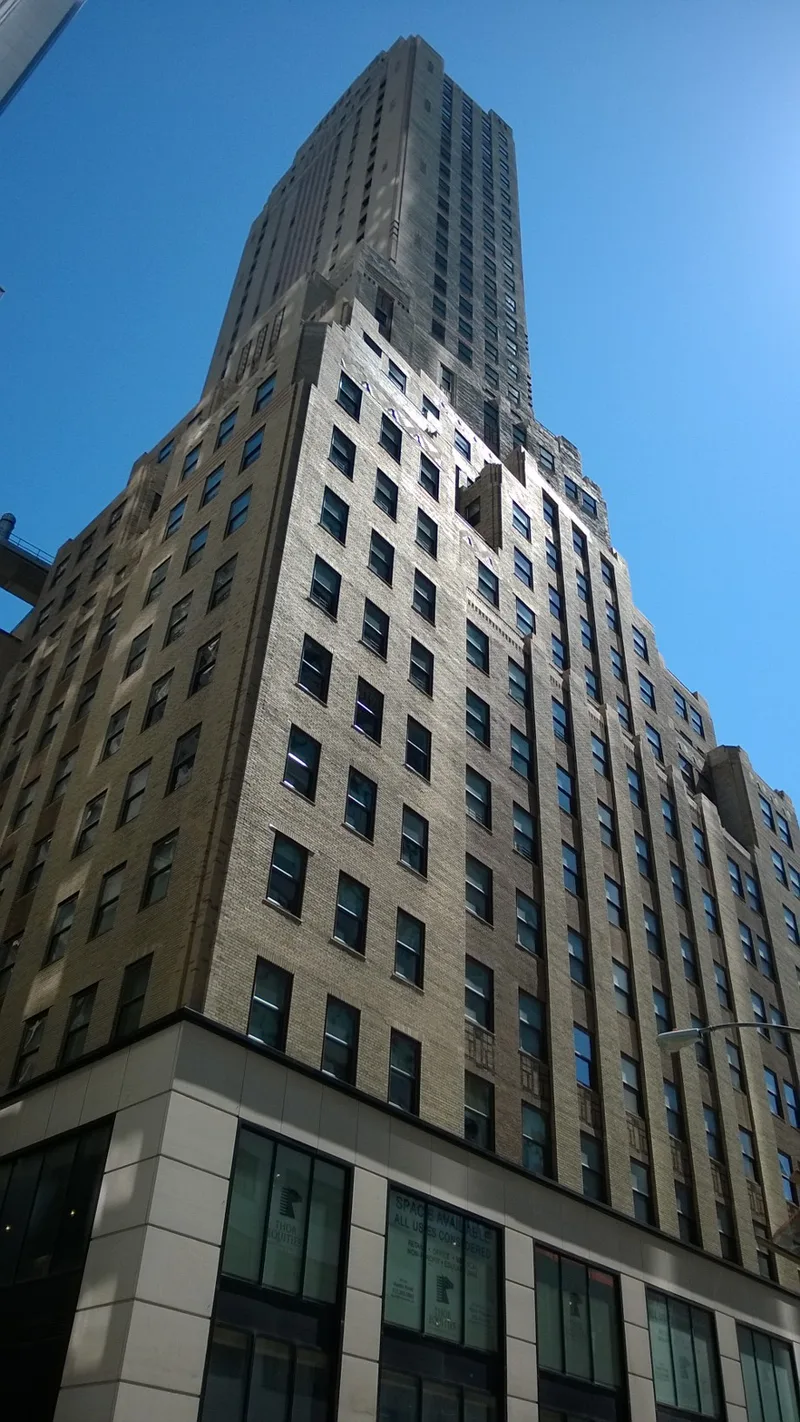
Building at 19 Rector St.

The National Park Service has not published a boundary polygon for this district; the map shows the listed properties inside it and the district's reference point.
Why it's listed
Rising thirty-seven stories on Rector Street in Lower Manhattan, this brick-clad Art Deco tower was built in 1929-30 and designed by architect Lafayette A. Goldstone. Its base fills the lot, and a series of setbacks leads to a tall, slender tower turned at an angle to take in views of the harbor and the Hudson River. Glazed terra-cotta chevron panels mark the setbacks, and the Rector Street entrance and lobby carry bronze work, marble and zigzag ornament. The building matters for two reasons. It is the largest skyscraper erected west of Broadway, built as the nearby Curb Exchange drew office development into a former residential and immigrant neighborhood. It also shows how the 1916 zoning rules and fashionable Art Deco design shaped New York skyscrapers of the late 1920s. A ten-story addition of 1955 matches the original in materials and color. The upper floors, once offices, now hold apartments, and the building keeps a high degree of integrity.
Machine-generated summary. This summary was generated by a language model from the official nomination document and has not been reviewed line by line by an editor. It may contain errors. Check the source document before relying on any detail. Source: nomination document (PDF) · catalog entry. Generated October 2026 (model claude-sonnet-5-5, prompt v1.0-2026-10-29).
| Period of significance | 1929-30 |
|---|---|
| Styles | Modern Movement/Art Deco skyscraper |
| Areas of significance | Architecture, Community Planning and Development |
| Acreage | 0.5 |
| Boundary source | not published |
| Full listing page | Building at 19 Rector St. (property record) |
What listing means for this property
This is a historic district. Buildings within its boundary are either contributing (they add to the district's significance) or non-contributing. Owners of contributing income-producing buildings can claim the 20% federal rehabilitation tax credit; homeowners should look at state credits. National Register districts impose no design review by themselves; a local historic district ordinance, if one exists, does (the difference explained).
General information, not legal or tax advice. Rules change; confirm with your State Historic Preservation Office or a qualified adviser.