Brown's Race Historic District

Why it's listed
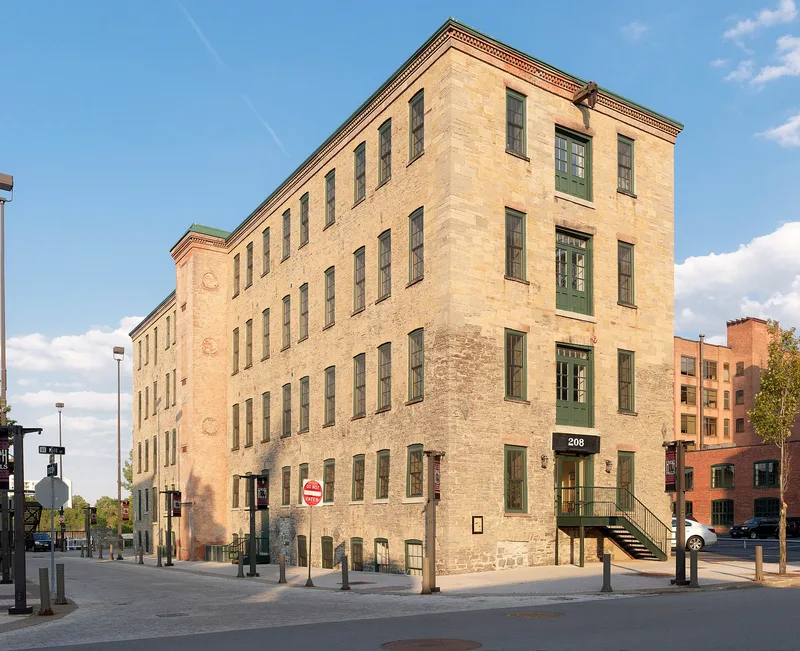
Brown's Race Historic District occupies an industrial corner of Rochester beside the Upper Falls of the Genesee River gorge. It includes 15 contributing buildings, 2 contributing structures and 14 contributing sites, mostly brick and stone factories from the nineteenth century. Notable examples include the six-story Romanesque Revival Gorsline Building, the High Victorian Rochester Water Works, the stone Selye Fire Engine Factory and the former Rochester Button Factory buildings. The structures include the open stone-lined millrace, thirty feet wide and five feet deep, and the iron truss Platt Street Bridge, now used by pedestrians. The district matters because it holds rare surviving evidence of Rochester's milling and manufacturing past. The race is the last visible water-filled raceway in the city, and the Triphammer site contains an overshot water wheel still in place in its pit. Parking lots over vanished mills add high archaeological potential.
Machine-generated summary. This summary was generated by a language model from the official nomination document and has not been reviewed line by line by an editor. It may contain errors. Check the source document before relying on any detail. Source: nomination document (PDF) · catalog entry. Generated October 2026 (model claude-sonnet-5-5, prompt v1.0-2026-10-29).
| Styles | Late Victorian: Second Empire and Romanesque |
|---|---|
| Areas of significance | Industry, Historic - Non-Aboriginal, Engineering, Architecture |
| Acreage | 11 |
| Boundary source | NPS cultural-resource GIS polygon |
| Full listing page | Brown's Race Historic District (property record) |
What listing means for this property
This is a historic district. Buildings within its boundary are either contributing (they add to the district's significance) or non-contributing. Owners of contributing income-producing buildings can claim the 20% federal rehabilitation tax credit; homeowners should look at state credits. National Register districts impose no design review by themselves; a local historic district ordinance, if one exists, does (the difference explained).
General information, not legal or tax advice. Rules change; confirm with your State Historic Preservation Office or a qualified adviser.