Bloomvale Historic District

Why it's listed
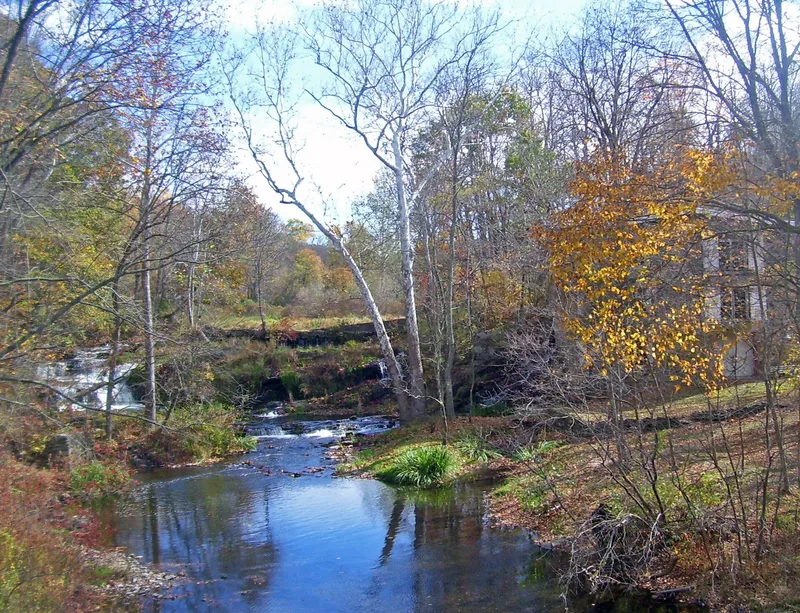
Bloomvale is a former mill site on the East Branch of Wappingers Creek in central Dutchess County, New York, with records reaching back to a 1749 deed. Colonial landholder Henry Filkins' family operated saw and grist mills here. Isaac Bloom later acquired the site and built a Federal-style mansion around 1801, a five-bay frame house with a Palladian window and restrained interior detail. In the 1840s a large stone cotton mill and workers' housing replaced the old grist mill. After the cotton mill burned in 1873, a smaller stone cider mill was built in 1913 from the ruins, with a concrete-reinforced dam and a turbine. The district holds the cider mill, a surviving worker's house, the Bloom house, the water system, old road and bridge abutments, and archeological remains of mill-village buildings. It was listed for the unusually intact survival of an industrial landscape that changed with regional economies, along with its architecture.
Machine-generated summary. This summary was generated by a language model from the official nomination document and has not been reviewed line by line by an editor. It may contain errors. Check the source document before relying on any detail. Source: nomination document (PDF) · catalog entry. Generated October 2026 (model claude-sonnet-5-5, prompt v1.0-2026-10-29).
| Period of significance | c1740-c1920 |
|---|---|
| Styles | Early Republic - Federal; No style |
| Areas of significance | Industry, Historic - Non-Aboriginal, Exploration/Settlement, Architecture |
| Acreage | 38 |
| Boundary source | NPS cultural-resource GIS polygon |
| Full listing page | Bloomvale Historic District (property record) |
What listing means for this property
This is a historic district. Buildings within its boundary are either contributing (they add to the district's significance) or non-contributing. Owners of contributing income-producing buildings can claim the 20% federal rehabilitation tax credit; homeowners should look at state credits. National Register districts impose no design review by themselves; a local historic district ordinance, if one exists, does (the difference explained).
General information, not legal or tax advice. Rules change; confirm with your State Historic Preservation Office or a qualified adviser.