Bloomer-Dailey House and Balmville Tree

The National Park Service has not published a boundary polygon for this district; the map shows the listed properties inside it and the district's reference point.
Why it's listed
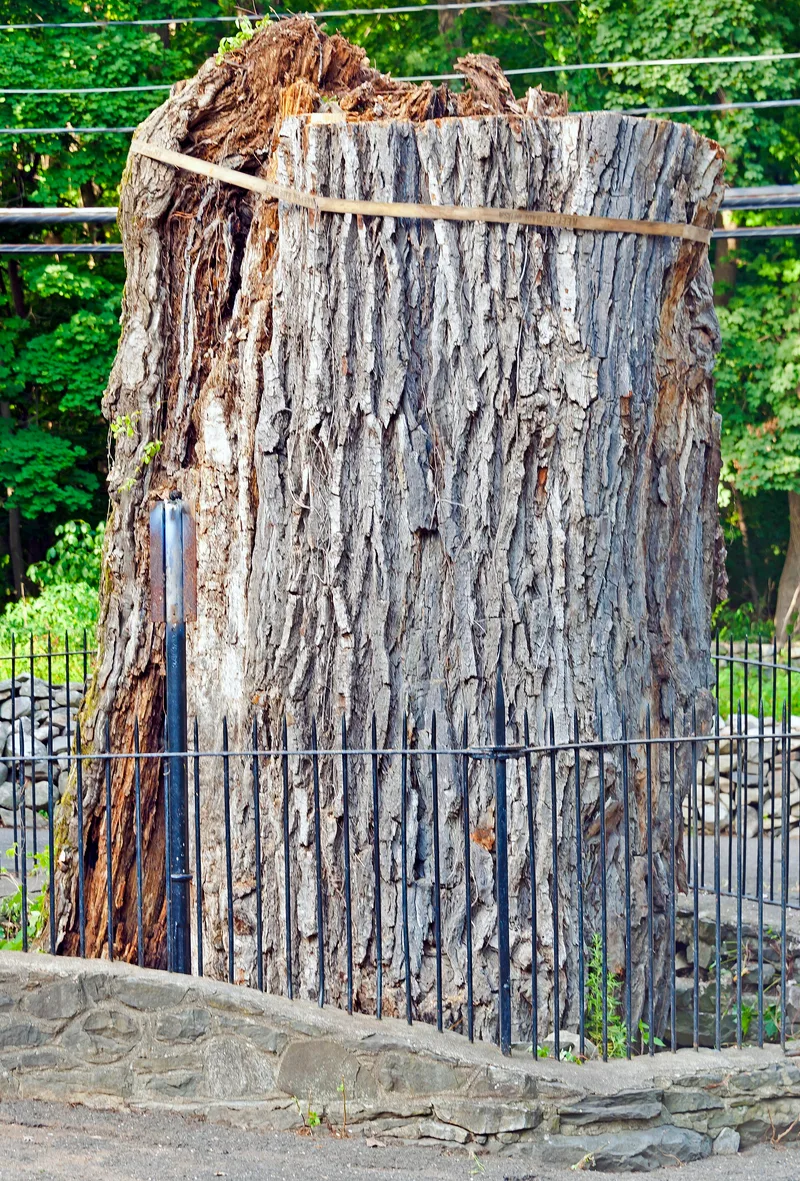
At the center of the crossroads hamlet of Balmville, just north of Newburgh, stands a small clapboard house whose core dates to about 1750. It began as a one-and-one-half story, three-bay timber-frame cottage with a side-hall plan, and later gained nineteenth century wings and a 1932 addition. In 1914 John Staples renovated it in the Colonial Revival style, adding a porch and central dormer and converting a nineteenth century outbuilding into a matching garage. Inside, the original heavy timber frame, cooking fireplace with iron crane and beamed ceilings survive. Beside the house, at the meeting of Balmville, River and Commonwealth Roads, grows the Balmville Tree, an Eastern Cottonwood dated by coring to 1699 and long mistaken for a Balm of Gilead. Both resources were listed for their architecture, their role in the hamlet's settlement history, and the tree's status as the namesake local landmark. The house is the only building surviving from the pre-Revolutionary hamlet.
Machine-generated summary. This summary was generated by a language model from the official nomination document and has not been reviewed line by line by an editor. It may contain errors. Check the source document before relying on any detail. Source: nomination document (PDF) · catalog entry. Generated October 2026 (model claude-sonnet-5-5, prompt v1.0-2026-10-29).
| Period of significance | ca.1750 |
|---|---|
| Styles | Colonial; Late 19th and 20th Century Revivals/Colonial Revival |
| Areas of significance | Architecture, Landscape Architecture |
| Acreage | 2 |
| Boundary source | not published |
| Full listing page | Bloomer-Dailey House and Balmville Tree (property record) |
What listing means for this property
This is a historic district. Buildings within its boundary are either contributing (they add to the district's significance) or non-contributing. Owners of contributing income-producing buildings can claim the 20% federal rehabilitation tax credit; homeowners should look at state credits. National Register districts impose no design review by themselves; a local historic district ordinance, if one exists, does (the difference explained).
General information, not legal or tax advice. Rules change; confirm with your State Historic Preservation Office or a qualified adviser.