Bennett, Abel, Tract Historic District

Why it's listed
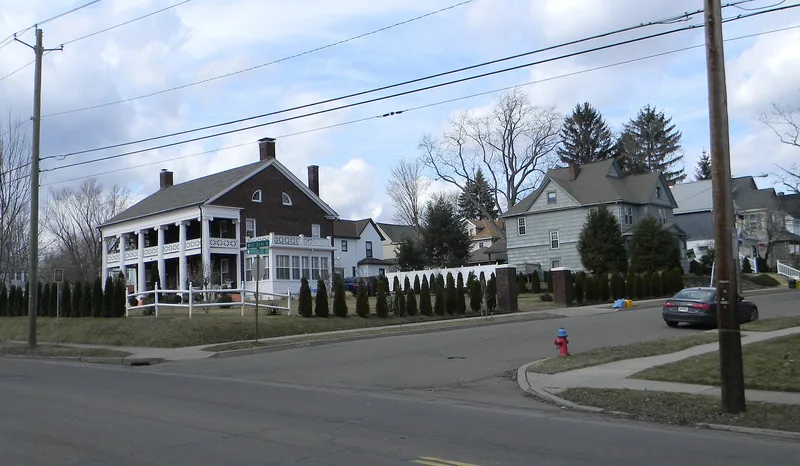
On Binghamton's west side, about a mile from the confluence of the Chenango and Susquehanna Rivers, a neighborhood of 23 blocks grew from the farm of Abel Bennett. Bennett and his heirs platted the land in 1887 and 1909, and the arrival of a streetcar line along Leroy Street in 1887 spurred building. The district holds roughly 1,050 contributing resources, mostly wood-frame houses, along with apartment buildings, carriage houses, garages and the 22-acre George F. Johnson Recreation Park. Early gabled cottages gave way to Queen Anne and Shingle style houses, followed by Colonial Revival, Craftsman, Dutch Colonial Revival and postwar Cape Cod homes, plus a 1952 Modern garden apartment complex. Lots are mostly 50 by 125 feet, with consistent setbacks, sidewalks and grass margins. The area was listed because it remains a highly intact streetcar suburb, keeping its street plan, scale and landscape features from its development between about 1882 and 1957.
Machine-generated summary. This summary was generated by a language model from the official nomination document and has not been reviewed line by line by an editor. It may contain errors. Check the source document before relying on any detail. Source: nomination document (PDF) · catalog entry. Generated October 2026 (model claude-sonnet-5-5, prompt v1.0-2026-10-29).
| Styles | Late Victorian, Late 19th and 20th Century Revivals, Late 19th and early 20th Century American Movements |
|---|---|
| Areas of significance | Community Planning and Development, Architecture, Social History |
| Acreage | 53 |
| Boundary source | NPS cultural-resource GIS polygon |
| Full listing page | Bennett, Abel, Tract Historic District (property record) |
What listing means for this property
This is a historic district. Buildings within its boundary are either contributing (they add to the district's significance) or non-contributing. Owners of contributing income-producing buildings can claim the 20% federal rehabilitation tax credit; homeowners should look at state credits. National Register districts impose no design review by themselves; a local historic district ordinance, if one exists, does (the difference explained).
General information, not legal or tax advice. Rules change; confirm with your State Historic Preservation Office or a qualified adviser.