Bellarose Village Municipal Complex

The National Park Service has not published a boundary polygon for this district; the map shows the listed properties inside it and the district's reference point.
Why it's listed
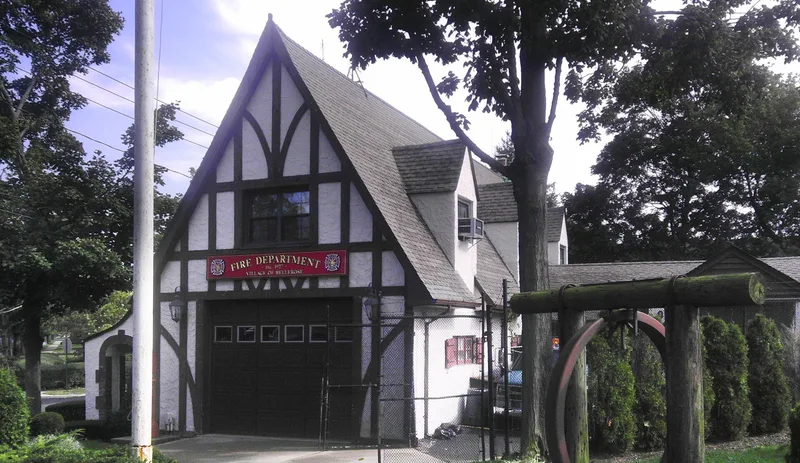
Three small civic buildings and a historic fire alarm form the municipal center of Bellerose, a village in western Nassau County laid out in a fan-shaped street pattern around the railroad station. The Village Hall, a Colonial Revival building with a gambrel roof, was completed in 1925 for the Bellerose Women's Club and sold to the village in 1985. Next to it stands the Tudor Revival Fire Hall, finished in 1930 after years of fundraising, with stucco walls and half-timbering. The police booth, built in 1935 on Magee Plaza, repeats the Tudor Revival style. An iron hoop alarm once rung to summon volunteer firefighters stands near the Fire Hall. The complex was listed for its role in how the village, incorporated in the 1920s, provided services and community gathering space, and for its intact revival-style architecture. All three buildings are described as well maintained, with original doors, trim and interior features still in place.
Machine-generated summary. This summary was generated by a language model from the official nomination document and has not been reviewed line by line by an editor. It may contain errors. Check the source document before relying on any detail. Source: nomination document (PDF) · catalog entry. Generated October 2026 (model claude-sonnet-5-5, prompt v1.0-2026-10-29).
| Period of significance | 1925-1956 |
|---|---|
| Styles | Tudor Revival; Colonial Revival |
| Areas of significance | Politics/Government, Community Planning and Development, Architecture |
| Acreage | 0.9 |
| Boundary source | not published |
| Full listing page | Bellarose Village Municipal Complex (property record) |
What listing means for this property
This is a historic district. Buildings within its boundary are either contributing (they add to the district's significance) or non-contributing. Owners of contributing income-producing buildings can claim the 20% federal rehabilitation tax credit; homeowners should look at state credits. National Register districts impose no design review by themselves; a local historic district ordinance, if one exists, does (the difference explained).
General information, not legal or tax advice. Rules change; confirm with your State Historic Preservation Office or a qualified adviser.