Beaux Arts Park Historic District

The National Park Service has not published a boundary polygon for this district; the map shows the listed properties inside it and the district's reference point.
Why it's listed
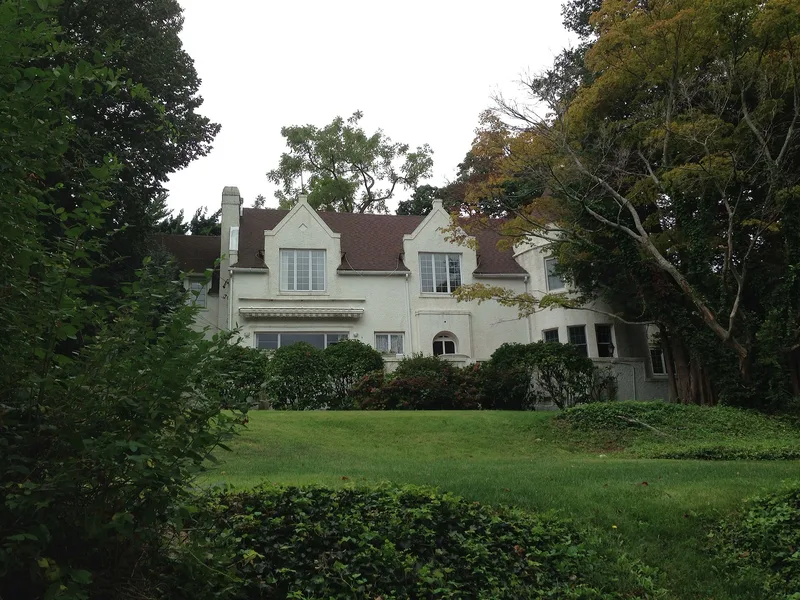
Five large stucco houses along Upper and Lower Drives in Huntington Bay make up this three-acre residential enclave on the north shore of Long Island. Built between about 1905 and 1915, the homes show Tudor Revival and Spanish Colonial Revival details, including steep slate or pantile roofs, towers, parapets, casement windows and wrought-iron ornament. Most keep their original carriage houses or servants' quarters. The houses were part of Beaux Arts Park, a development planned by the Bustanoby Brothers, New York City entrepreneurs, around an 1870s waterfront hotel and a 1905 casino, both now gone. The plan called for nearly one hundred residences, but only these five were built, and the developers appear to have lost control of the venture by 1917. The district is valued as one of only two surviving planned communities of its era in Huntington Bay, and as a clear break from the local building tradition. Its architecture, outbuildings and shoreline views remain largely intact.
Machine-generated summary. This summary was generated by a language model from the official nomination document and has not been reviewed line by line by an editor. It may contain errors. Check the source document before relying on any detail. Source: nomination document (PDF) · catalog entry. Generated October 2026 (model claude-sonnet-5-5, prompt v1.0-2026-10-29).
| Period of significance | c. 1905-c. 1915 |
|---|---|
| Styles | Tudor Revival and Spanish Colonial Revival |
| Areas of significance | Exploration/Settlement, Architecture |
| Acreage | 3 |
| Boundary source | not published |
| Full listing page | Beaux Arts Park Historic District (property record) |
What listing means for this property
This is a historic district. Buildings within its boundary are either contributing (they add to the district's significance) or non-contributing. Owners of contributing income-producing buildings can claim the 20% federal rehabilitation tax credit; homeowners should look at state credits. National Register districts impose no design review by themselves; a local historic district ordinance, if one exists, does (the difference explained).
General information, not legal or tax advice. Rules change; confirm with your State Historic Preservation Office or a qualified adviser.