Bay Crest Historic District

Why it's listed
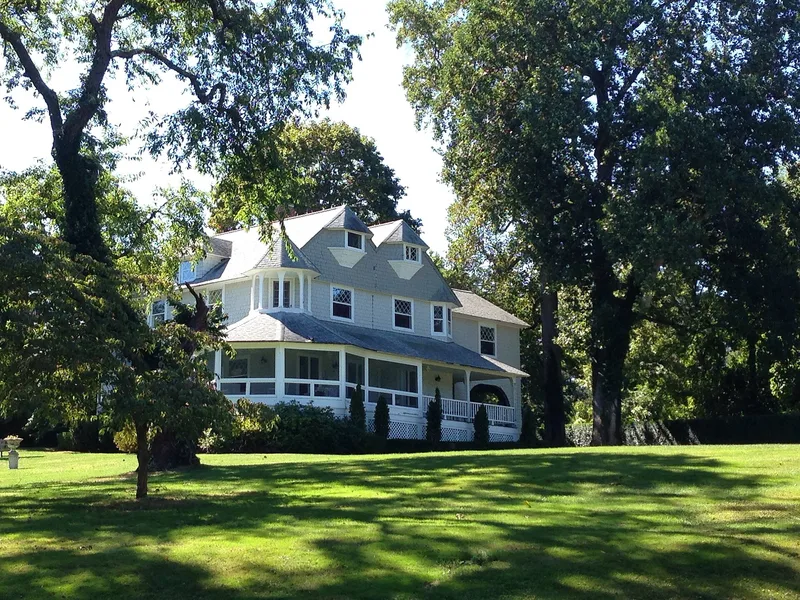
Bay Crest is a compact group of twelve large summer-style residences and nine outbuildings in Huntington Bay, Suffolk County, New York. Built between about 1890 and 1905, the houses sit on generous landscaped lots along narrow winding private lanes, entered through granite markers reading "Bay Crest." No two houses are alike, but they share towers, wraparound porches, porte-cochères, varied windows, shingle or clapboard siding and decorative woodwork. Examples include the Colonial Revival John Smithers House of 1905 and Queen Anne and Shingle style homes such as the Horwitt, Grant Baldwin and W. M. Baylis houses. The enclave was laid out by unknown developers between 1887 and 1910 and originally held fourteen properties. It reflects the area's late nineteenth-century development, when wealthy buyers sought scenic bay views and easy rail access to New York City. It is one of only two surviving planned communities of its kind in Huntington Bay, and many carriage houses and views remain intact.
Machine-generated summary. This summary was generated by a language model from the official nomination document and has not been reviewed line by line by an editor. It may contain errors. Check the source document before relying on any detail. Source: nomination document (PDF) · catalog entry. Generated October 2026 (model claude-sonnet-5-5, prompt v1.0-2026-10-29).
| Styles | Late Victorian picturesque styles, including Queen Anne, Shingle, Stick and Colonial Revival |
|---|---|
| Areas of significance | Exploration/Settlement, Architecture |
| Acreage | 16 |
| Boundary source | NPS cultural-resource GIS polygon |
| Full listing page | Bay Crest Historic District (property record) |
What listing means for this property
This is a historic district. Buildings within its boundary are either contributing (they add to the district's significance) or non-contributing. Owners of contributing income-producing buildings can claim the 20% federal rehabilitation tax credit; homeowners should look at state credits. National Register districts impose no design review by themselves; a local historic district ordinance, if one exists, does (the difference explained).
General information, not legal or tax advice. Rules change; confirm with your State Historic Preservation Office or a qualified adviser.