Albemarle-Kenmore Terraces Historic District

The National Park Service has not published a boundary polygon for this district; the map shows the listed properties inside it and the district's reference point.
Why it's listed
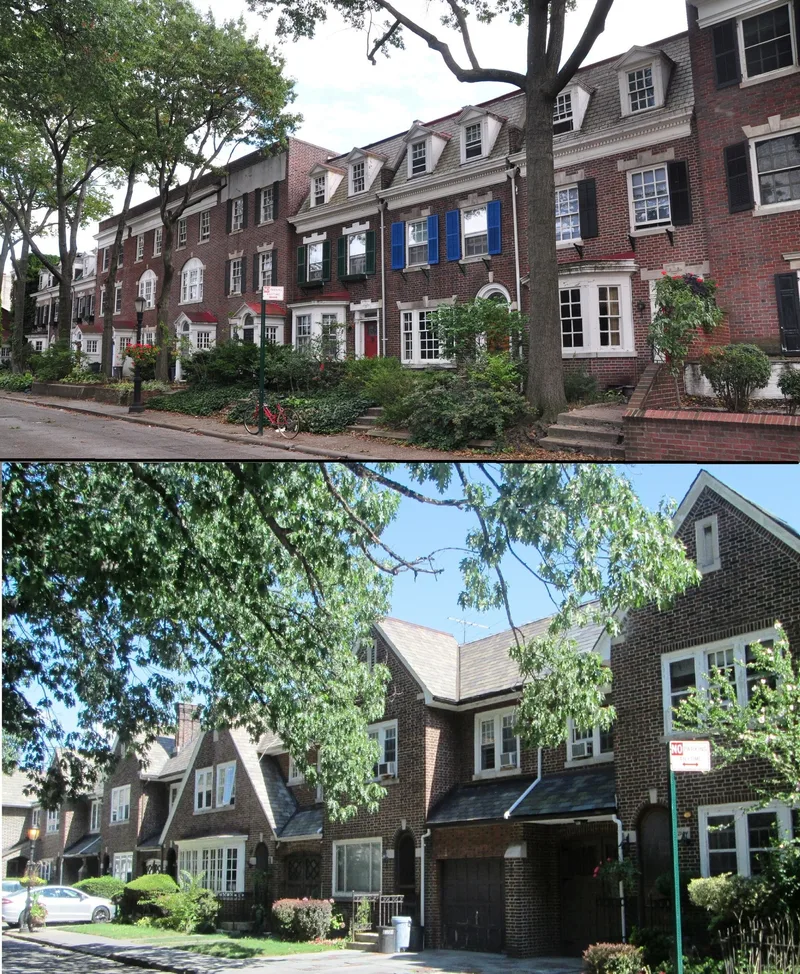
Albemarle and Kenmore Terraces are two small residential courts in the historic core of Flatbush, Brooklyn, reached from East 21st Street near the Flatbush Dutch Reformed Church and Erasmus Hall. Mabel Bull acquired the land from the Lott family in 1916 and hired Midwood Associates to develop row houses for middle-class buyers. The architects, Slee & Bryson, designed Albemarle Terrace in the neo-Federal style, with Flemish bond brick, stone trim, slate roofs and arched doorways, arranged in symmetrical rows of three-story and two-and-a-half-story houses. Kenmore Terrace follows English Garden City models, with L-shaped houses, gabled fronts and integrated garages, an early response to the automobile. Houses were built between 1916 and 1920 and sold soon after completion. Restrictive covenants helped preserve the consistent look of both courts. The district is valued as a well-preserved example of planned suburban development in early twentieth century New York City.
Machine-generated summary. This summary was generated by a language model from the official nomination document and has not been reviewed line by line by an editor. It may contain errors. Check the source document before relying on any detail. Source: nomination document (PDF) · catalog entry. Generated October 2026 (model claude-sonnet-5-5, prompt v1.0-2026-10-29).
| Period of significance | 1916-19 |
|---|---|
| Styles | Neo-Federal (Albemarle Terrace); English Garden City type (Kenmore Terrace) |
| Areas of significance | Community Planning and Development, Architecture |
| Acreage | 2 |
| Boundary source | not published |
| Full listing page | Albemarle-Kenmore Terraces Historic District (property record) |
What listing means for this property
This is a historic district. Buildings within its boundary are either contributing (they add to the district's significance) or non-contributing. Owners of contributing income-producing buildings can claim the 20% federal rehabilitation tax credit; homeowners should look at state credits. National Register districts impose no design review by themselves; a local historic district ordinance, if one exists, does (the difference explained).
General information, not legal or tax advice. Rules change; confirm with your State Historic Preservation Office or a qualified adviser.