Yarmouth Camp Ground Historic District

Why it's listed
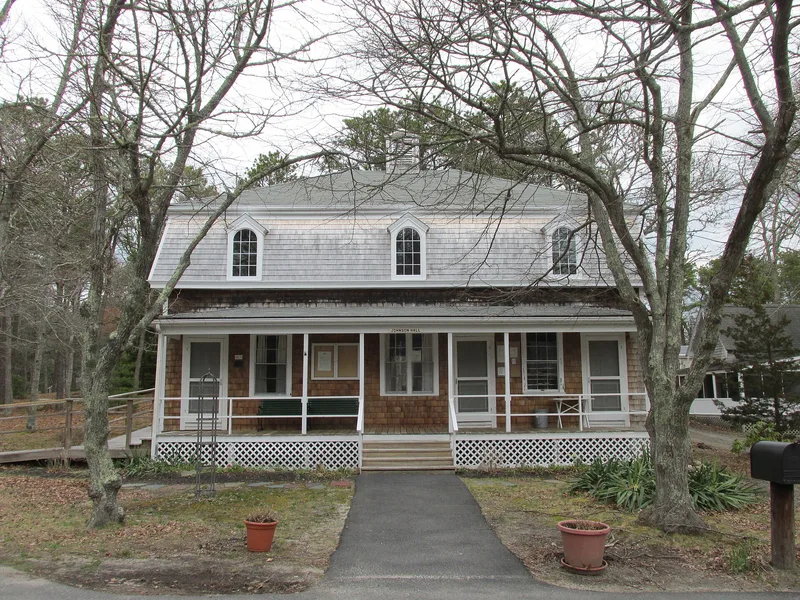
Yarmouth Camp Ground is a 60.6-acre Methodist camp meeting site in western Yarmouth, Massachusetts, with a small part in Barnstable. Land was acquired beginning in 1863, and an open worship area, first ringed by tents, gradually gave way to permanent cottages. By the mid-1880s about 150 small Gothic Revival cottages stood here, many with board and batten or shingle siding, pointed-arch openings and ornate vergeboards. Alfred Berry, Joseph Bassett and Nathaniel Snow were among the builders. Public buildings included Grove House (1872) and Johnson Hall (1871), both still standing, while the Tabernacle, Dining Hall and railroad station were lost. Camp meetings ran every year from 1863 to 1939. In 1945 the cottage owners bought the grounds from the camp meeting association. Narrow tree-lined roads, footpaths and the preserved open space of Tabernacle Park keep the original relationship between buildings and landscape clear. The district was listed as an unusually cohesive and authentic example of its type.
Machine-generated summary. This summary was generated by a language model from the official nomination document and has not been reviewed line by line by an editor. It may contain errors. Check the source document before relying on any detail. Source: nomination document (PDF) · catalog entry. Generated October 2026 (model claude-sonnet-5-5, prompt v1.0-2026-10-29).
| Styles | Mid-19th Century/Gothic Revival; Late Victorian/Second Empire; No Style |
|---|---|
| Areas of significance | Community Planning and Development, Entertainment/Recreation, Architecture, Religion, Social History |
| Acreage | 61 |
| Boundary source | NPS cultural-resource GIS polygon |
| Full listing page | Yarmouth Camp Ground Historic District (property record) |
What listing means for this property
This is a historic district. Buildings within its boundary are either contributing (they add to the district's significance) or non-contributing. Owners of contributing income-producing buildings can claim the 20% federal rehabilitation tax credit; homeowners should look at state credits. National Register districts impose no design review by themselves; a local historic district ordinance, if one exists, does (the difference explained).
General information, not legal or tax advice. Rules change; confirm with your State Historic Preservation Office or a qualified adviser.