Woods End Road Historic District

Why it's listed
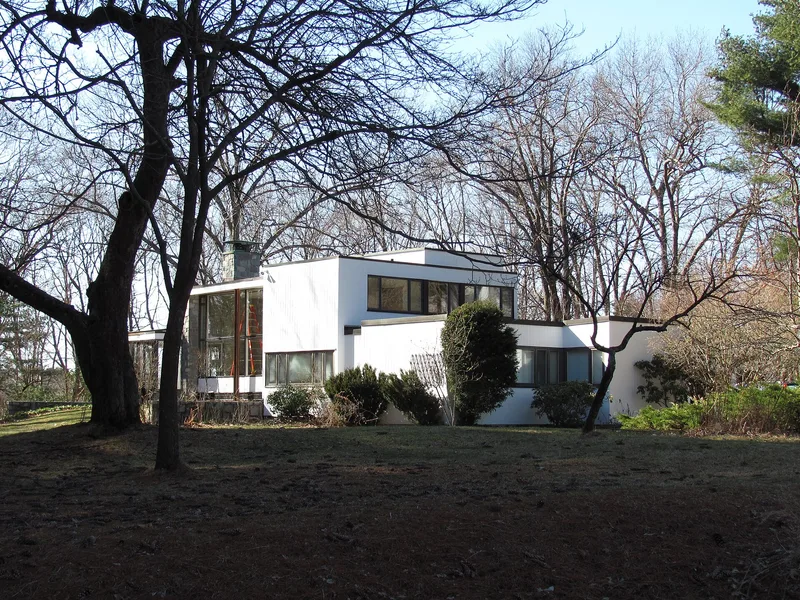
Woods End Road is a small enclave of seventeen acres in Lincoln, Massachusetts, set in the remains of an apple and cherry orchard between a low hill and a ledge. Its cul-de-sac was laid out in 1938, and five houses with two garages were built there in 1938 and 1939. Four houses are two-story International Style designs with flat roofs and vertical board siding: the Gropius, Ford, Breuer and Bogner Houses. The fifth, the Loud House, is a Federal Revival copy of a Cape Cod house designed by Constance Mumford Warren. Gropius and Breuer designed three of the houses shortly after arriving in the United States, and Gropius lived in his own home for thirty-one years. Helen Osborne Storrow funded the development and kept ownership of the properties until her death, and the tenants were largely Harvard professors. The district is notable for its architecture, its relation of buildings to landscape, and its influence on later cooperative communities of architect-designed houses.
Machine-generated summary. This summary was generated by a language model from the official nomination document and has not been reviewed line by line by an editor. It may contain errors. Check the source document before relying on any detail. Source: nomination document (PDF) · catalog entry. Generated October 2026 (model claude-sonnet-5-5, prompt v1.0-2026-10-29).
| Period of significance | 1938-1945 |
|---|---|
| Styles | International Style; Federal Revival |
| Areas of significance | Community Planning and Development, Architecture, Social History |
| Acreage | 17 |
| Boundary source | NPS cultural-resource GIS polygon |
| Full listing page | Woods End Road Historic District (property record) |
What listing means for this property
This is a historic district. Buildings within its boundary are either contributing (they add to the district's significance) or non-contributing. Owners of contributing income-producing buildings can claim the 20% federal rehabilitation tax credit; homeowners should look at state credits. National Register districts impose no design review by themselves; a local historic district ordinance, if one exists, does (the difference explained).
General information, not legal or tax advice. Rules change; confirm with your State Historic Preservation Office or a qualified adviser.