Woodcock-Hatch-Maxcy House Historic District

Why it's listed
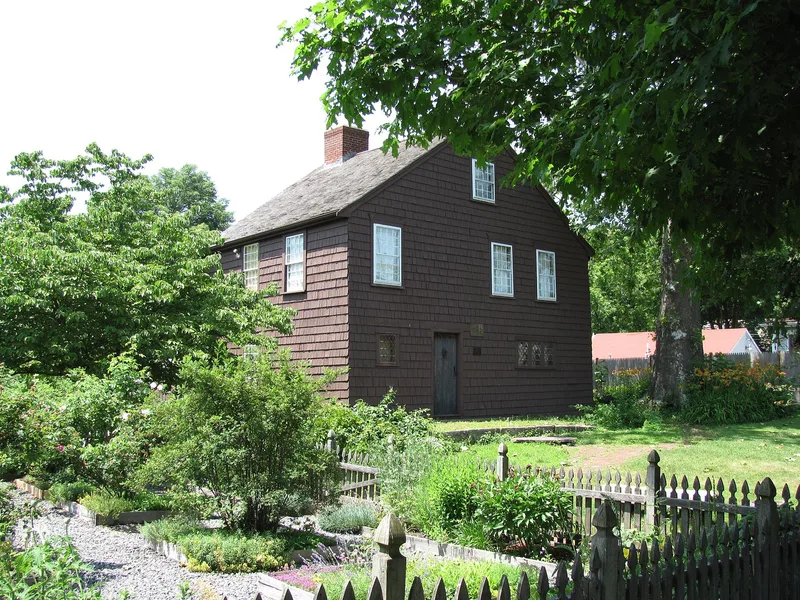
Located at the junction of North Washington and East Washington Streets in North Attleborough, this 2.1-acre district centers on a two-and-a-half-story plank-framed house built about 1715-1720 by John Daggett. Known locally as the Woodcock Garrison House, it is probably not the original garrison, which stood about thirty feet away and was razed in 1806. The house is a rare Massachusetts example of a stone-ender, with a large masonry mass at one gable end, a two-room plan and a half cellar. The district also includes a burial ground across the street, with 112 stones from 1723 to 1825, and a relocated c. 1850 schoolhouse. The site began with John Woodcock's 1670 ordinary on the main route between Boston and Rhode Island. Later the Maxcy and Hatch families ran a tavern and inn here. Jonathan Maxcy, second president of Brown University, was born in the house in 1768. The Historical Society now operates it as a museum.
Machine-generated summary. This summary was generated by a language model from the official nomination document and has not been reviewed line by line by an editor. It may contain errors. Check the source document before relying on any detail. Source: nomination document (PDF) · catalog entry. Generated October 2026 (model claude-sonnet-5-5, prompt v1.0-2026-10-29).
| Period of significance | 1670-c. 1890 |
|---|---|
| Styles | Colonial/Post medieval English (stone-ender) |
| Areas of significance | Community Planning and Development, Exploration/Settlement, Architecture |
| Acreage | 2.1 |
| Boundary source | NPS cultural-resource GIS polygon |
| Full listing page | Woodcock-Hatch-Maxcy House Historic District (property record) |
What listing means for this property
This is a historic district. Buildings within its boundary are either contributing (they add to the district's significance) or non-contributing. Owners of contributing income-producing buildings can claim the 20% federal rehabilitation tax credit; homeowners should look at state credits. National Register districts impose no design review by themselves; a local historic district ordinance, if one exists, does (the difference explained).
General information, not legal or tax advice. Rules change; confirm with your State Historic Preservation Office or a qualified adviser.