Winter Street Historic District

The National Park Service has not published a boundary polygon for this district; the map shows the listed properties inside it and the district's reference point.
Why it's listed
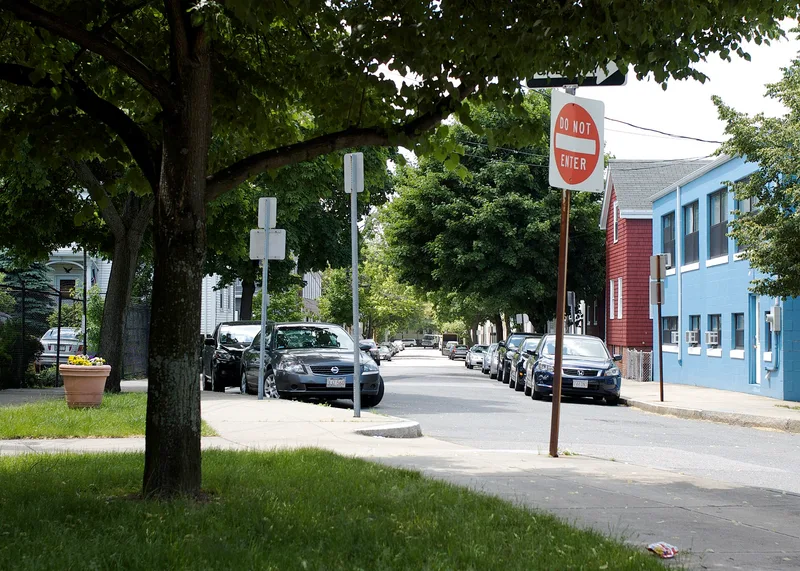
Winter Street in East Cambridge is a short residential street of 16 houses, most of them modest frame workers' cottages built before 1854. Laid out in 1811 by the Lechmere Point Corporation, it became a desirable place for workers' housing once industries settled along nearby Bridge Street. Many early residents worked in the glass factories, especially the New England Glass Company and Bay State Glass Company. The standard house is a narrow, center-hall Late Georgian cottage with a simple cornice and a steep gable end facing the street, set close to its neighbors beside a narrow side yard. The street keeps a range of types, from one-and-a-half story cottages to double houses and a few later bracketed additions. Notable examples include the 1833-34 house built for glass master Thomas Leighton and a house of 1838 built for grocer Atherton Stevens. The district was recognized as the best surviving grouping of this house type in East Cambridge.
Machine-generated summary. This summary was generated by a language model from the official nomination document and has not been reviewed line by line by an editor. It may contain errors. Check the source document before relying on any detail. Source: nomination document (PDF) · catalog entry. Generated October 2026 (model claude-sonnet-5-5, prompt v1.0-2026-10-29).
| Period of significance | 1830s - 1850s |
|---|---|
| Styles | Late Georgian |
| Areas of significance | Architecture |
| Acreage | 1.1 |
| Boundary source | not published |
| Full listing page | Winter Street Historic District (property record) |
What listing means for this property
This is a historic district. Buildings within its boundary are either contributing (they add to the district's significance) or non-contributing. Owners of contributing income-producing buildings can claim the 20% federal rehabilitation tax credit; homeowners should look at state credits. National Register districts impose no design review by themselves; a local historic district ordinance, if one exists, does (the difference explained).
General information, not legal or tax advice. Rules change; confirm with your State Historic Preservation Office or a qualified adviser.