Wianno Historic District

Why it's listed
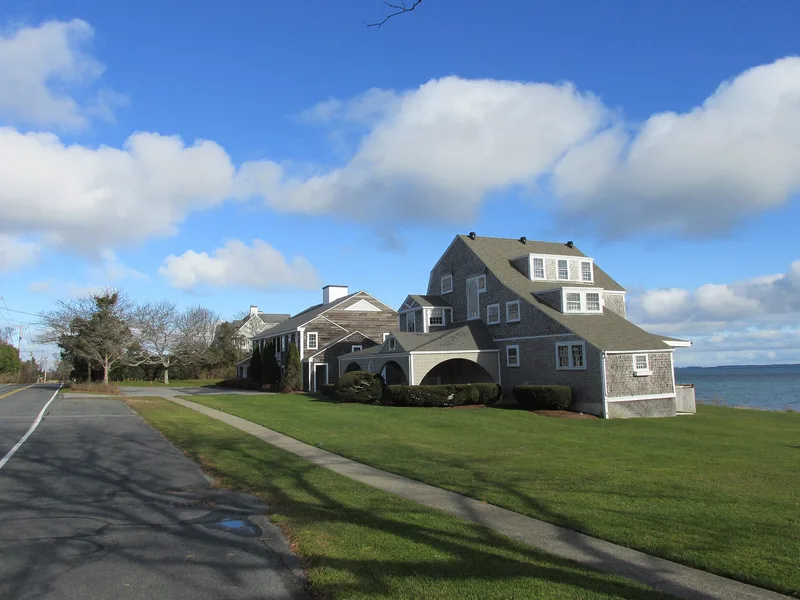
Wianno is a planned summer colony in Osterville, a village of Barnstable, Massachusetts, covering about 40 acres between Nantucket Sound and Crystal Lake. It was laid out with curving roads and very large lots, often over an acre. A group of local, Boston and New York businessmen assembled the land and sold lots on a speculative basis to wealthy visitors who came to Cape Cod after the Civil War. The Cotocheset House hotel, built about 1873, anchored the resort. After it burned in 1881, the present Wianno Club building replaced it. Large Shingle Style and Colonial Revival houses followed, marked by rambling masses, gambrel and gable roofs, many dormers and wood shingle walls. Development was largely complete by World War I. Boston architect Horace Frazer designed the hotel and several houses. The district is considered important as a well-preserved example of the resort trade that became Barnstable's leading industry, and for its cohesive architecture. The district holds 24 contributing buildings.
Machine-generated summary. This summary was generated by a language model from the official nomination document and has not been reviewed line by line by an editor. It may contain errors. Check the source document before relying on any detail. Source: nomination document (PDF) · catalog entry. Generated October 2026 (model claude-sonnet-5-5, prompt v1.0-2026-10-29).
| Styles | Shingle Style and Colonial Revival |
|---|---|
| Areas of significance | Community Planning and Development, Entertainment/Recreation, Architecture |
| Acreage | 40 |
| Boundary source | NPS cultural-resource GIS polygon |
| Full listing page | Wianno Historic District (property record) |
What listing means for this property
This is a historic district. Buildings within its boundary are either contributing (they add to the district's significance) or non-contributing. Owners of contributing income-producing buildings can claim the 20% federal rehabilitation tax credit; homeowners should look at state credits. National Register districts impose no design review by themselves; a local historic district ordinance, if one exists, does (the difference explained).
General information, not legal or tax advice. Rules change; confirm with your State Historic Preservation Office or a qualified adviser.