West Hatfield Historic District

Why it's listed
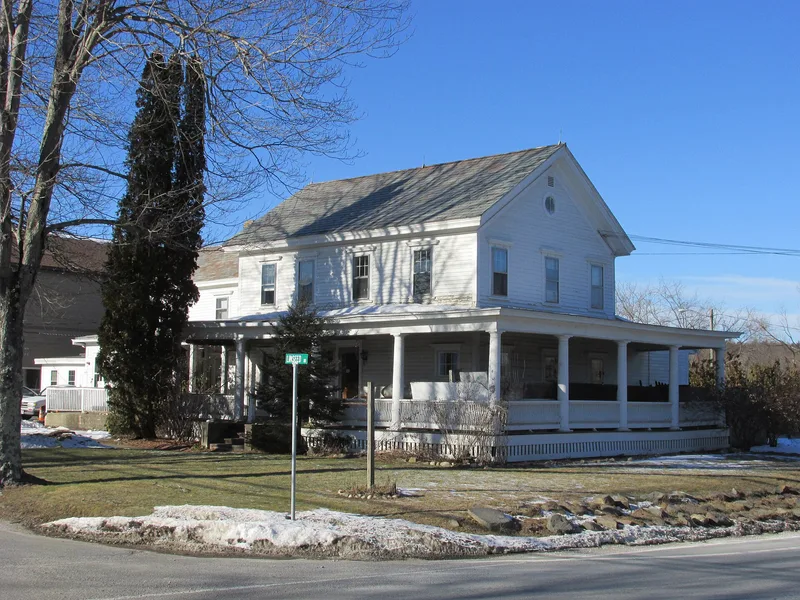
West Hatfield is a narrow strip of Connecticut River floodplain in Hatfield, Massachusetts, split north to south by Route 5-10 and bounded on the east by Interstate 91. The district contains 31 buildings, mainly modest farmhouses, cottages, tobacco sorting shops, barns and a chapel. The earliest house is a late-Federal dwelling of about 1830. Other buildings include an Italianate house of about 1845, a Stick Style Congregational Chapel of 1889 and several Queen Anne and Colonial Revival houses from the early twentieth century. Many were built by local farmer-carpenters, often from the German community. The area was listed for its agricultural past, especially tobacco and onion growing, and for its ethnic heritage. It is also listed for the way the automobile age brought tearooms, gas stations and other roadside businesses to West Street. The nomination also notes a strong chance of buried Native American and early farmstead remains.
Machine-generated summary. This summary was generated by a language model from the official nomination document and has not been reviewed line by line by an editor. It may contain errors. Check the source document before relying on any detail. Source: nomination document (PDF) · catalog entry. Generated October 2026 (model claude-sonnet-5-5, prompt v1.0-2026-10-29).
| Period of significance | 1830-1959 |
|---|---|
| Styles | Federal, Greek Revival, Queen Anne, Colonial Revival, Stick Style, Italianate and vernacular farmhouses |
| Areas of significance | Agriculture, European, Transportation |
| Acreage | 30 |
| Boundary source | NPS cultural-resource GIS polygon |
| Full listing page | West Hatfield Historic District (property record) |
What listing means for this property
This is a historic district. Buildings within its boundary are either contributing (they add to the district's significance) or non-contributing. Owners of contributing income-producing buildings can claim the 20% federal rehabilitation tax credit; homeowners should look at state credits. National Register districts impose no design review by themselves; a local historic district ordinance, if one exists, does (the difference explained).
General information, not legal or tax advice. Rules change; confirm with your State Historic Preservation Office or a qualified adviser.