Wenham Historic District

Why it's listed
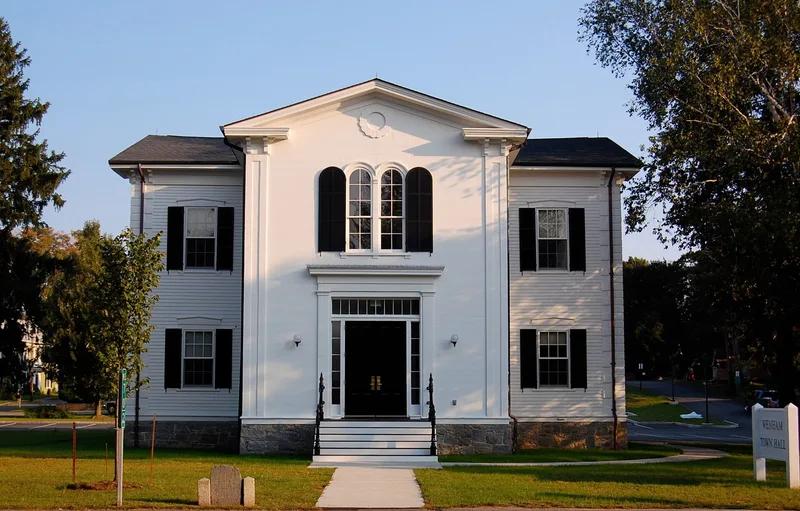
Main Street in Wenham, Massachusetts, forms a 1.8-mile historic district between the Beverly and Hamilton town lines. It contains 89 buildings, most close to the street and small in scale, including houses, the Town Hall, First Church, a library, a museum and a few shops. The road began as an Indian path beside Wenham Lake, and the town was established in 1643. Its houses range from the 1662 Claflin-Richards House to Federal, Greek Revival, Italian Villa and Victorian buildings, many altered by successive generations. The brick Lummus Tavern of 1826 served stagecoach travelers. Residents included craftsmen, farmers, shopkeepers and innkeepers. The district also recalls the Wenham Lake ice industry, which began in 1842, Civil War-era Camp Lander at Pingree Field, and horse-car service. Its value lies in the architectural variety and the continuous thread of local history, and about 60 percent of the buildings date from before 1900.
Machine-generated summary. This summary was generated by a language model from the official nomination document and has not been reviewed line by line by an editor. It may contain errors. Check the source document before relying on any detail. Source: nomination document (PDF) · catalog entry. Generated October 2026 (model claude-sonnet-5-5, prompt v1.0-2026-10-29).
| Styles | Mixed styles from the 17th to 19th centuries, including Colonial, Federal, Greek Revival, Italian Villa, mansard, carpenter Gothic and Victorian |
|---|---|
| Areas of significance | Industry, Commerce, Agriculture, Military, Transportation, Politics/Government, Architecture |
| Acreage | 190 |
| Boundary source | NPS cultural-resource GIS polygon |
| Full listing page | Wenham Historic District (property record) |
What listing means for this property
This is a historic district. Buildings within its boundary are either contributing (they add to the district's significance) or non-contributing. Owners of contributing income-producing buildings can claim the 20% federal rehabilitation tax credit; homeowners should look at state credits. National Register districts impose no design review by themselves; a local historic district ordinance, if one exists, does (the difference explained).
General information, not legal or tax advice. Rules change; confirm with your State Historic Preservation Office or a qualified adviser.