Wellington Farm Historic District

Why it's listed
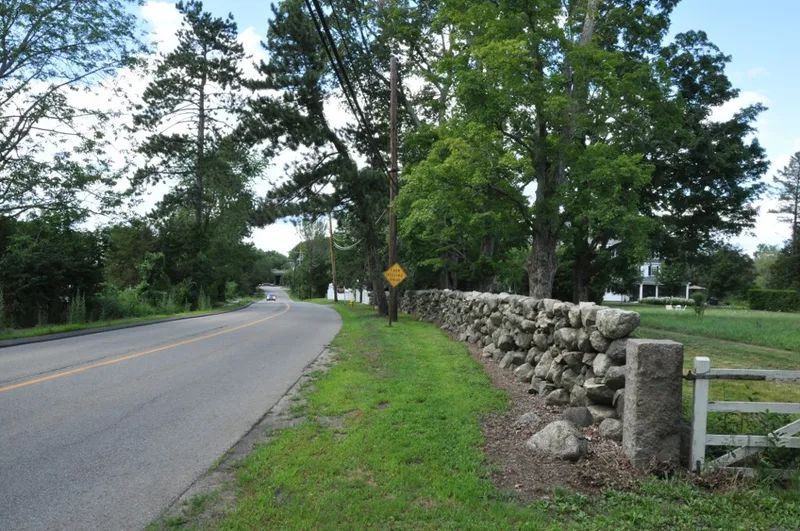
Wellington Farm is a 35-acre farmstead in southern Weston, Massachusetts, split by Wellesley Street. Its main house began about 1760 as a five-bay, center-chimney dwelling attributed to Thomas Pierce. It was enlarged and reoriented around 1800-1820 under the Brown family, then raised to three stories with a gambrel roof around the turn of the 20th century, when wealthy Boston owners used the place as a summer residence. Across the street stands a red barn complex with cupolas and a silo, parts of which may be 18th-century. A 1917 farmer's cottage, designed by Joseph Everrett Chandler and assembled partly from older outbuildings, stands nearby, along with early-20th-century pigsties and stone walls that still define the fields. The Wellington family has owned the farm since 1907, raising horses and Guernsey cattle, and today it grows hay for boarded horses. It was listed because it survives as a rare working farm in a heavily developed suburb and shows how a New England farmstead changed over time.
Machine-generated summary. This summary was generated by a language model from the official nomination document and has not been reviewed line by line by an editor. It may contain errors. Check the source document before relying on any detail. Source: nomination document (PDF) · catalog entry. Generated October 2026 (model claude-sonnet-5-5, prompt v1.0-2026-10-29).
| Period of significance | ca. 1760 - 1937 |
|---|---|
| Styles | Georgian, Federal, Colonial Revival |
| Areas of significance | Agriculture, Architecture |
| Acreage | 35 |
| Boundary source | NPS cultural-resource GIS polygon |
| Full listing page | Wellington Farm Historic District (property record) |
What listing means for this property
This is a historic district. Buildings within its boundary are either contributing (they add to the district's significance) or non-contributing. Owners of contributing income-producing buildings can claim the 20% federal rehabilitation tax credit; homeowners should look at state credits. National Register districts impose no design review by themselves; a local historic district ordinance, if one exists, does (the difference explained).
General information, not legal or tax advice. Rules change; confirm with your State Historic Preservation Office or a qualified adviser.