Webster Park Historic District

Why it's listed
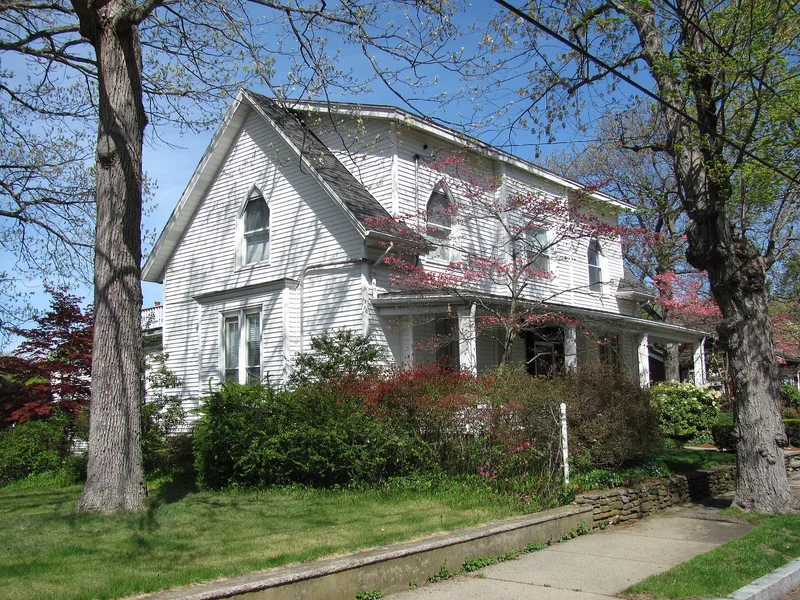
Webster Park Historic District is a residential neighborhood of 26 properties in West Newton, Massachusetts, centered on Webster Street and a small oval park. It was the southwest corner of the Webster Place subdivision, laid out in 1844 by surveyor and landscape architect Alexander Wadsworth for developer William J. Porter, next to the Boston & Worcester Railroad. The district's best-known feature is a group of eight Gothic Revival cottages, originally ten, designed by Boston architect Edward Shaw and built by housewright John Rollins in the late 1840s. Twin gables and central entrance pavilions mark these houses. Later buildings include Italianate, Mansard, and Queen Anne houses, along with an early school moved to the area and converted to a house. Little changed here after 1900. The district is described as one of the least altered early railroad suburbs in Newton, and it was listed for its intact subdivision plan and its architecture.
Machine-generated summary. This summary was generated by a language model from the official nomination document and has not been reviewed line by line by an editor. It may contain errors. Check the source document before relying on any detail. Source: nomination document (PDF) · catalog entry. Generated October 2026 (model claude-sonnet-5-5, prompt v1.0-2026-10-29).
| Period of significance | 1845-1870 |
|---|---|
| Styles | Gothic Revival, with Italianate, Mansard, and Queen Anne buildings |
| Areas of significance | Community Planning and Development, Architecture, Social History |
| Acreage | 11.5 |
| Boundary source | NPS cultural-resource GIS polygon |
| Full listing page | Webster Park Historic District (property record) |
What listing means for this property
This is a historic district. Buildings within its boundary are either contributing (they add to the district's significance) or non-contributing. Owners of contributing income-producing buildings can claim the 20% federal rehabilitation tax credit; homeowners should look at state credits. National Register districts impose no design review by themselves; a local historic district ordinance, if one exists, does (the difference explained).
General information, not legal or tax advice. Rules change; confirm with your State Historic Preservation Office or a qualified adviser.