Washington Street Shoe District

Why it's listed
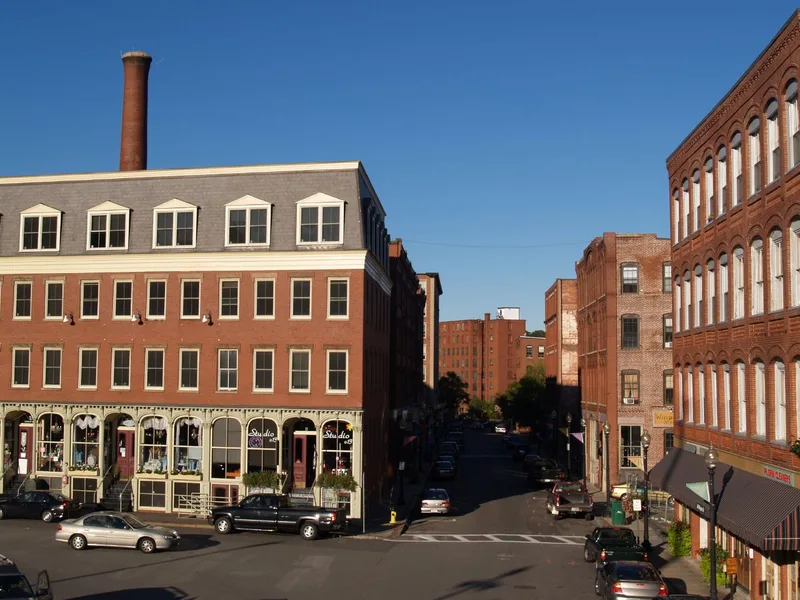
Downtown Haverhill's Washington Street Shoe District covers roughly 11 acres of brick factory and commercial buildings erected between 1856 and 1930. Shoe manufacturing became the city's leading industry by the mid-19th century, and factories moved westward toward the railroad that brought shoe buyers to town. On the night of February 17, 1882, a fire leveled nearly ten acres, destroying fifteen major blocks and putting more than 3,000 people out of work. Rebuilding began within days, and most of the district dates from that single year. Architects Josiah M. Littlefield and C. Willis Damon designed many of the buildings, which display panel brickwork, terra cotta, brownstone and sandstone trim, and styles from Italianate to Queen Anne and Romanesque. Haverhill shoes won medals at several international expositions, earning the city the nickname Queen Slipper City of the World. Apart from altered ground-floor storefronts, the upper facades remain largely intact and no modern buildings have intruded.
Machine-generated summary. This summary was generated by a language model from the official nomination document and has not been reviewed line by line by an editor. It may contain errors. Check the source document before relying on any detail. Source: nomination document (PDF) · catalog entry. Generated October 2026 (model claude-sonnet-5-5, prompt v1.0-2026-10-29).
| Period of significance | 1800-1899 |
|---|---|
| Styles | Italianate, Queen Anne, Romanesque-inspired, panel brick commercial and factory buildings |
| Areas of significance | Industry, Commerce, Architecture |
| Acreage | 11 |
| Boundary source | NPS cultural-resource GIS polygon |
| Full listing page | Washington Street Shoe District (property record) |
What listing means for this property
This is a historic district. Buildings within its boundary are either contributing (they add to the district's significance) or non-contributing. Owners of contributing income-producing buildings can claim the 20% federal rehabilitation tax credit; homeowners should look at state credits. National Register districts impose no design review by themselves; a local historic district ordinance, if one exists, does (the difference explained).
General information, not legal or tax advice. Rules change; confirm with your State Historic Preservation Office or a qualified adviser.